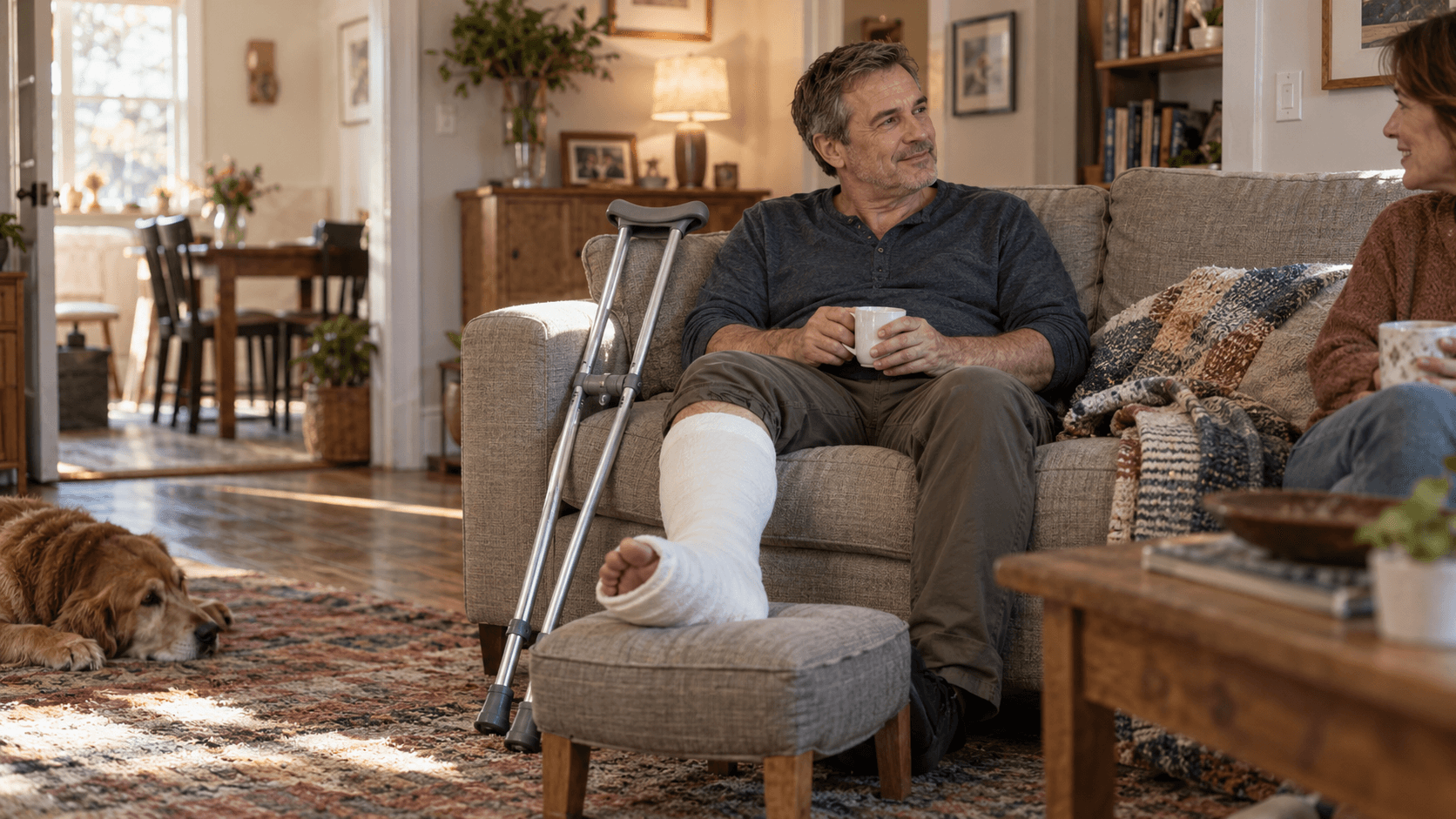







A broken leg is hard to miss.
If you break your leg, you seek treatment. The injury is visible. The need for care is obvious.

Our mission is to make appropriate cognitive and sensory care as understandable, trusted, and accessible as care for physical health.
People deserve a clear explanation of their options and a say in what happens next.
Not every challenge is visible.
If you break your leg, you seek treatment. The injury is visible. The need for care is obvious.
Consider someone experiencing hearing loss.
They may start missing parts of conversations. Stop joining group discussions. Avoid social gatherings. Slowly withdraw from the people they love.
Not because they want to. Because connecting has become exhausting.
What looks like disinterest may actually be frustration. What looks like withdrawal may be someone struggling to keep up.
A broken leg can limit where you go. Hearing loss can change how you connect, how you see yourself, and how connected you feel to the world.
One is visible. The other may quietly affect every part of your life.
Both can be devastating.
Someone may still need auditory training to help their brain make sense of sound.
Difficulties with memory, attention, or processing can affect confidence, independence, relationships, and the ability to participate in everyday life.
When effective care exists, seeking it should feel natural.
Not every challenge is visible.
Doesn’t make it matter any less.
At 18, Avi nearly died from septic shock. Survival was only the beginning of a much longer recovery.
In the years that followed, he struggled to walk straight, experienced cognitive difficulties, and faced emotional and mental health challenges. The impact on his everyday life reached far beyond the original physical illness.
His doctors were incredible. The gap wasn’t a lack of care or commitment. He and his doctors didn’t have the tools and infrastructure to navigate these challenges together over time.
He came to understand how much of recovery happens between visits, when there was no ongoing connection to the people caring for him.
Brian has lived with anxiety-related tinnitus his entire life.
It affected his mental health, including restless nights spent trying to get the sound to stop.
For more than a decade, he also watched hearing rehabilitation needs go unmet for cochlear implant and hearing aid users. That was part of what led him to help build Neocore.
That experience informs our belief that sensory challenges and mental well-being need to be understood together, within the context of a whole life.
And we believe we can make it minimally disruptive.
We want to design care around the life you want to live, not the condition you’re managing. We don’t want you to feel like a patient every day. We want you to feel like a person who knows care will be there when you need it.
The freedom to live without constantly thinking about treatment, and the reassurance that a break in care doesn’t have to become a permanent barrier to returning.
We are building toward care that helps people participate in the moments that matter to them, with evidence they can understand and support they can return to.