Neocare

the new model for care, built for treatment journeys that last a lifetime

2021
2022
2023
2024
2025
2026
2027
2028
2029

First tinnitus check

Score 58

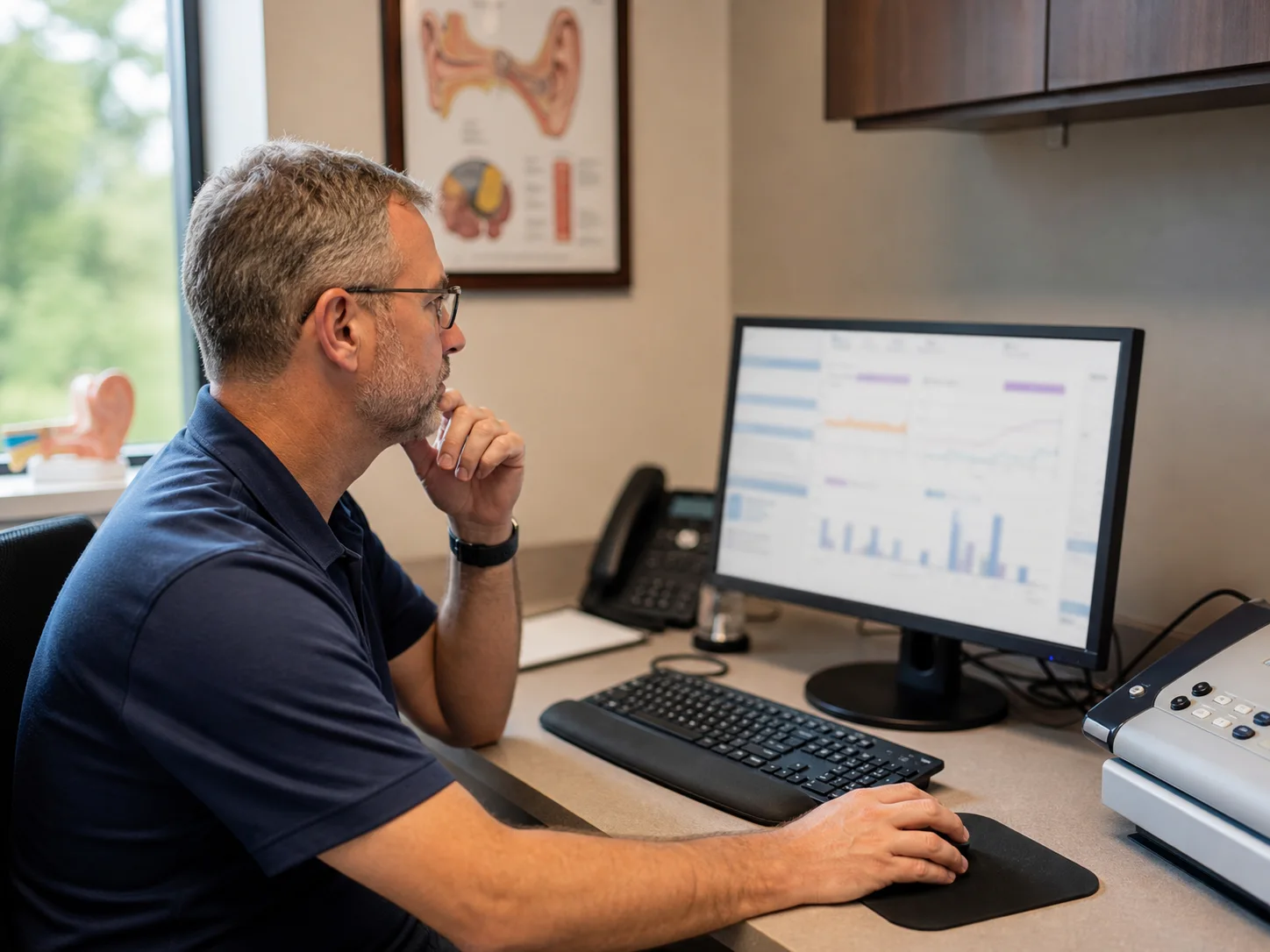
Clinician reviewing a patient's progress charts

Care team review

Plan agreed

Hearing test

Score 42 dB
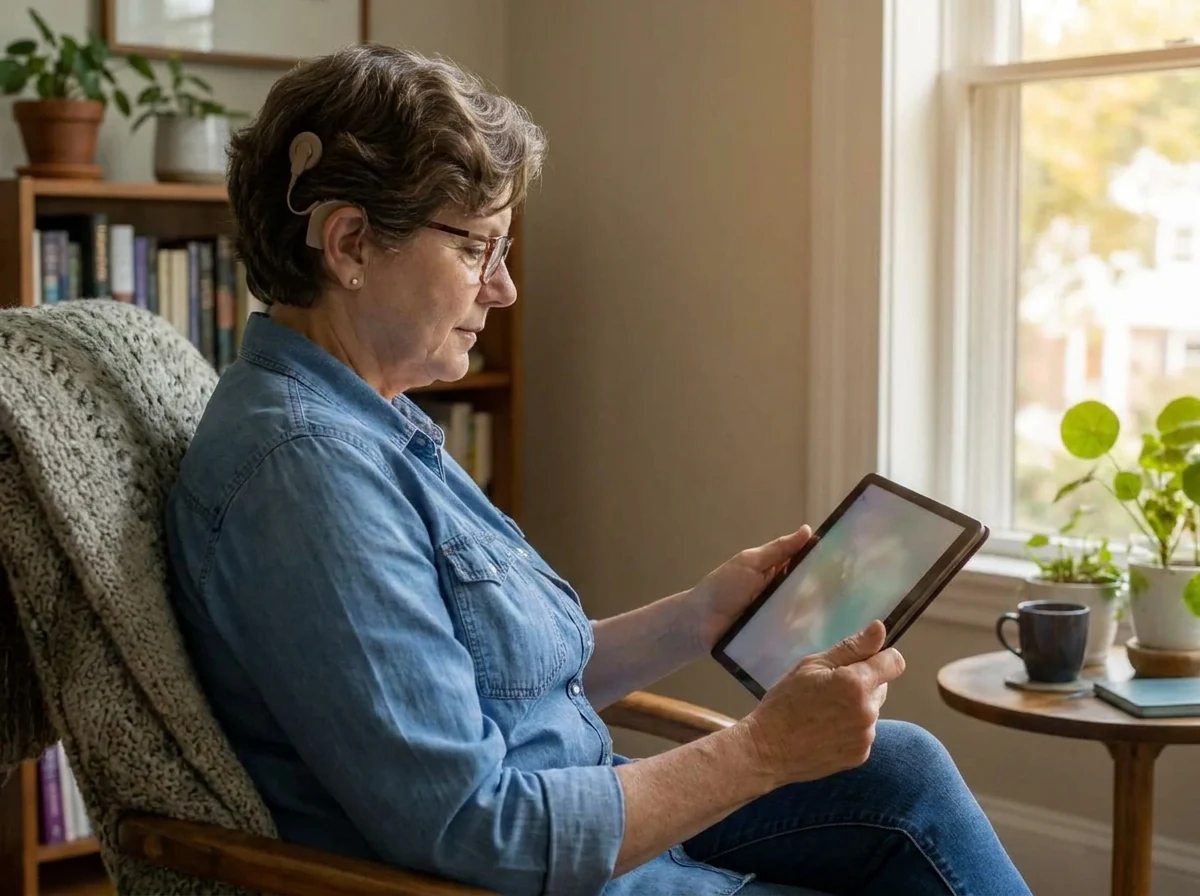
Patient doing auditory training on a tablet at home

Listening practice

Level 3 reached

Patient using a tablet on the sofa at home

Sound therapy

40 sessions

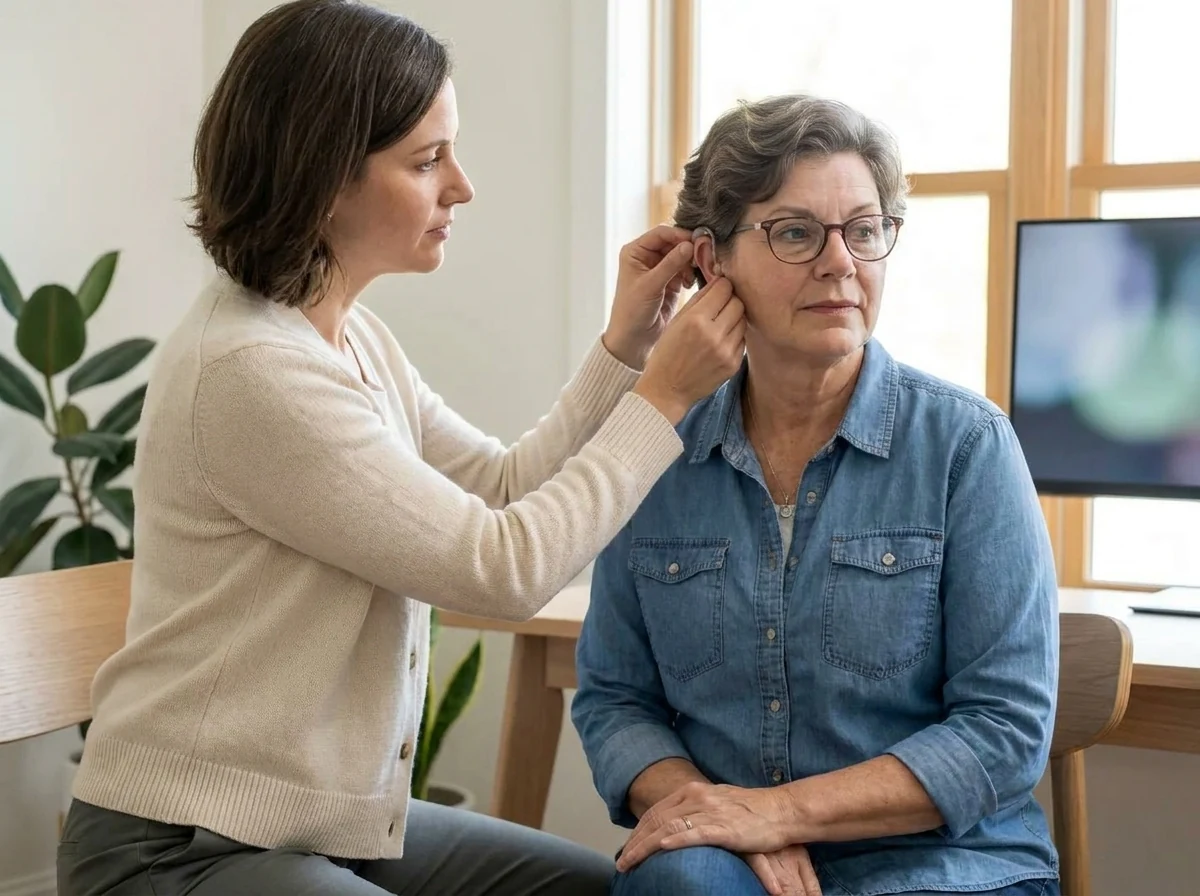
Audiologist fitting a hearing aid

Hearing aids fitted

Both ears

Sleep diary

Most nights logged

Patient and her daughter checking in together on a tablet

Daughter joined

Sees weekly updates

Tinnitus check-in

Score 46 → 34

Sleep check-in

Score 19 → 12

Sound therapy
Sleep program
Hearing aids
Caregiver
Started Resona
Added sound therapy
Added sleep support
Sound therapy done
Clearer in noisy rooms
5 years in care
LikelyTinnitus in the mild range
LikelySleeping through most nights
PlannedNext hearing test
PlannedYearly care review
LikelyLighter routine
PlannedNew hearing aids
NOW · 2026-01-01

Building a world around the care journey

One connected journey, with your care team involved. Every check-in, session, and visit lands in one shared record that also shows what is likely to come next.
  1. Enrollment

    Structured care starts with a clear program

    • The patient is placed into a structured program by their care team.
    • Care begins immediately, no waiting, no ambiguity about what happens next.
    • The program defines what the patient will work on over time.
    For patients

    I’m guided from the start.

    For providers

    I can initiate structured care quickly.

    For loved ones and caregivers

    I know what the plan is and how I can help.
    Sonara: questions that match the patient to the right hearing program
  2. Access

    Remove friction from day one

    • Patients join easily, no complex setup.
    • Available at home, in clinic, or on the go.
    • No ongoing effort required to figure out what to do next.
    For patients

    This is easy to start and use.

    For providers

    No onboarding burden or drop-off risk.

    For loved ones and caregivers

    I can follow along without learning a new system.
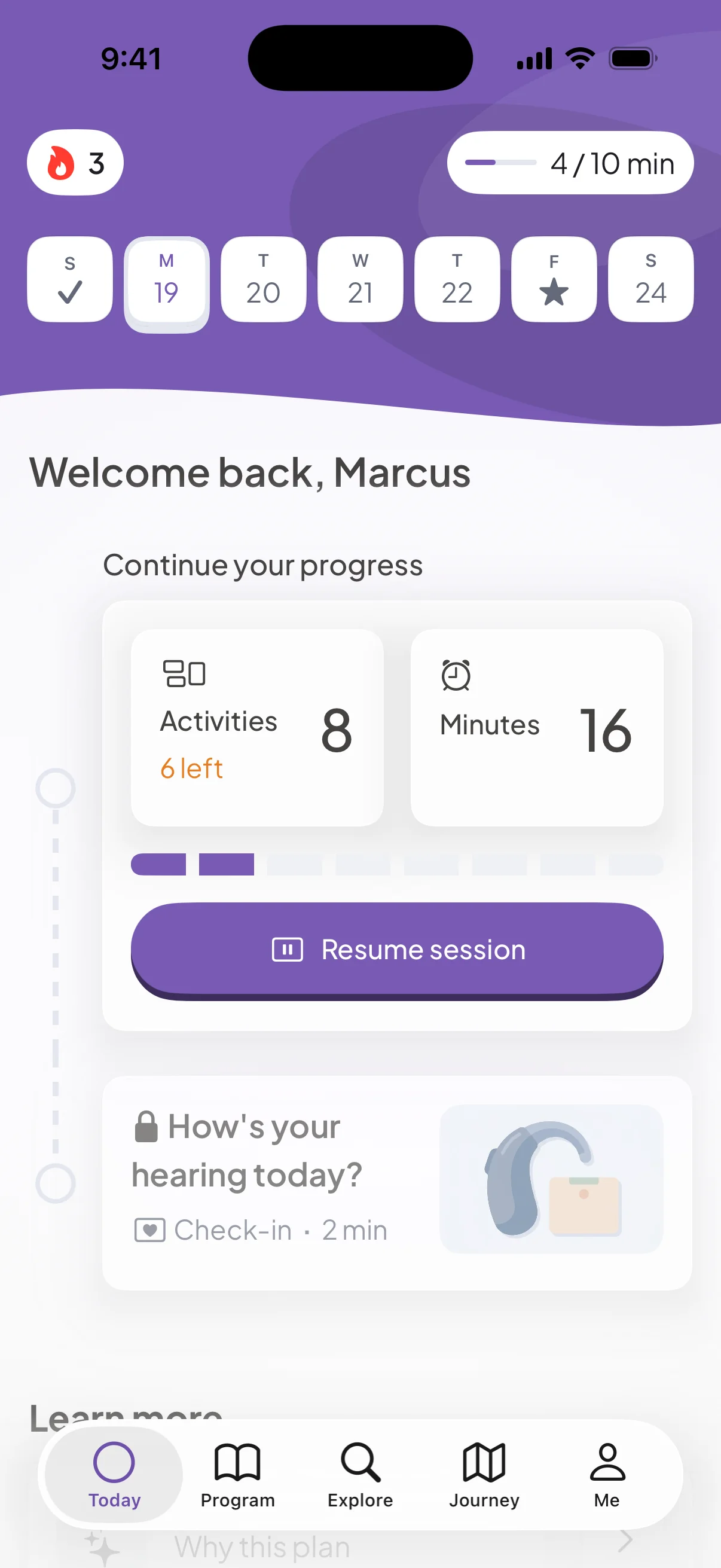
    Sonara: Today, see what’s next without hunting through menus
  3. Daily therapy

    Care that fits your life, not the other way around

    • Living with symptoms is tiring, and many people start out exhausted or overwhelmed. The plan is built around that.
    • Short guided sessions on the days you can. Skip a day and nothing is lost: your plan picks up where you left off.
    • Practice builds gradually, so progress adds up without asking for more than you have.
    For patients

    I can keep going on hard weeks without falling behind.

    For providers

    Missed days don't derail the plan, so patients stay with it.

    For loved ones and caregivers

    I can encourage practice without pushing.
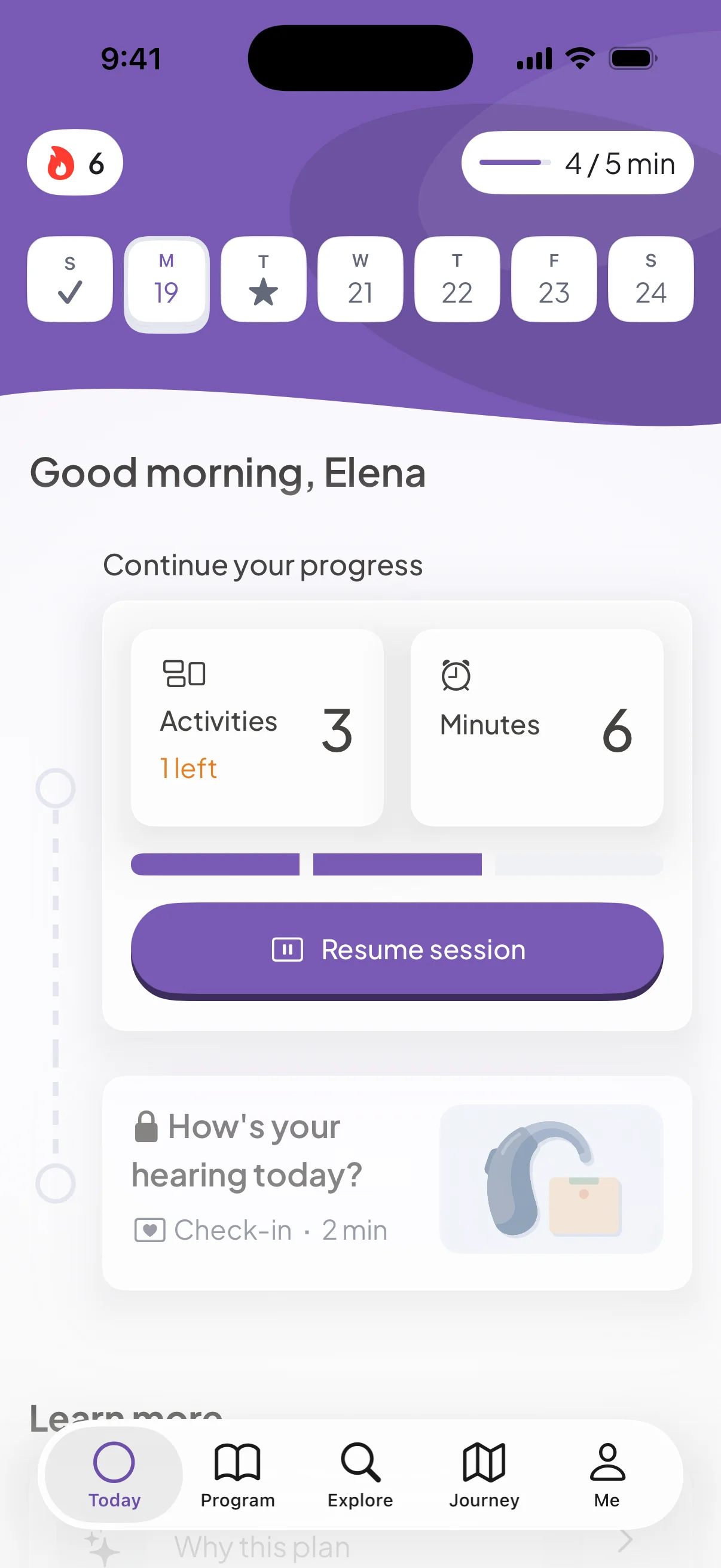
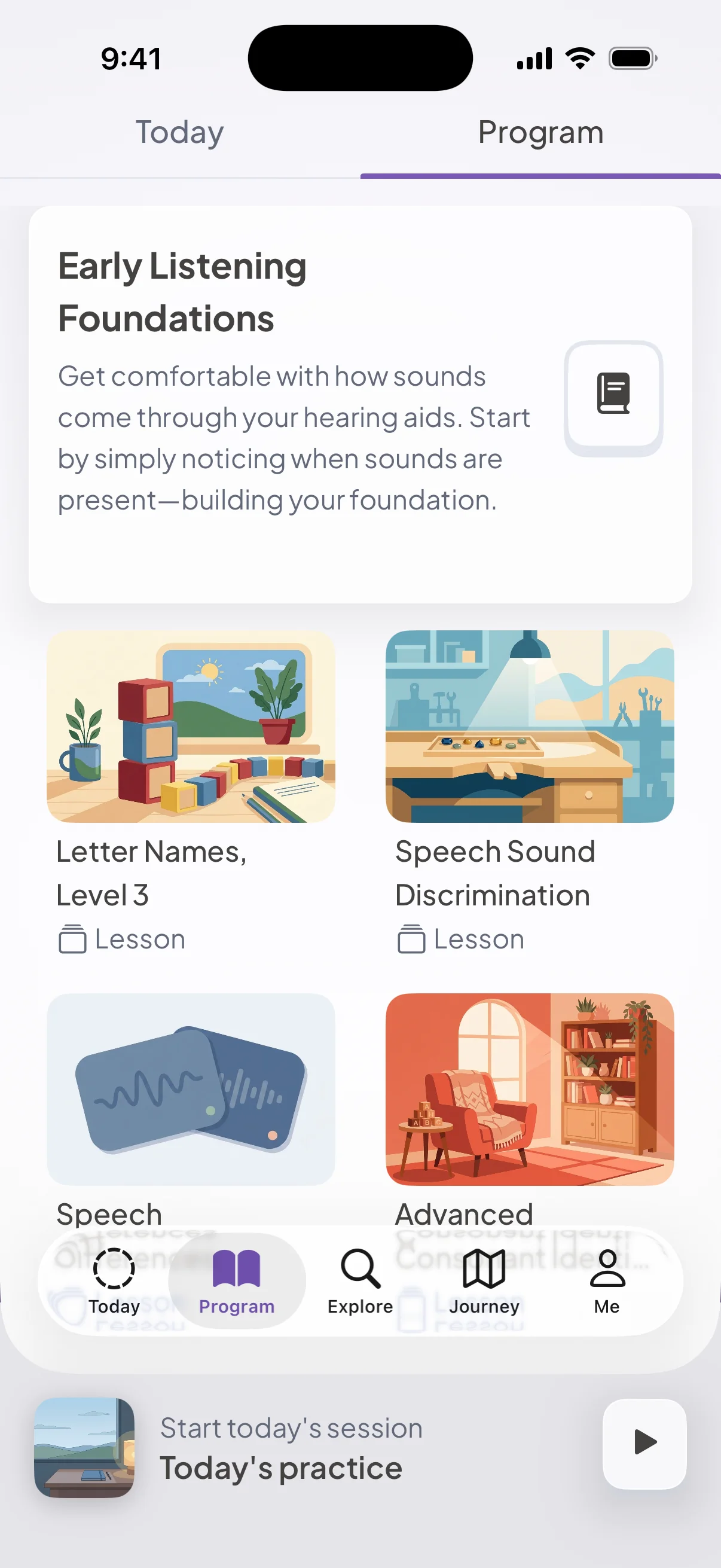
    Sonara: today’s training plan with guided daily sessions
  4. Continuous monitoring

    Visibility without more appointments

    • Progress is tracked over time, not as one-off snapshots.
    • Clinicians see trends, engagement, and performance.
    • Identify who is improving vs. who needs attention, and intervene when it matters.
    For patients

    My progress is tracked and supported.

    For providers

    I have visibility without needing more appointments.

    For loved ones and caregivers

    I see the updates they choose to share with me.
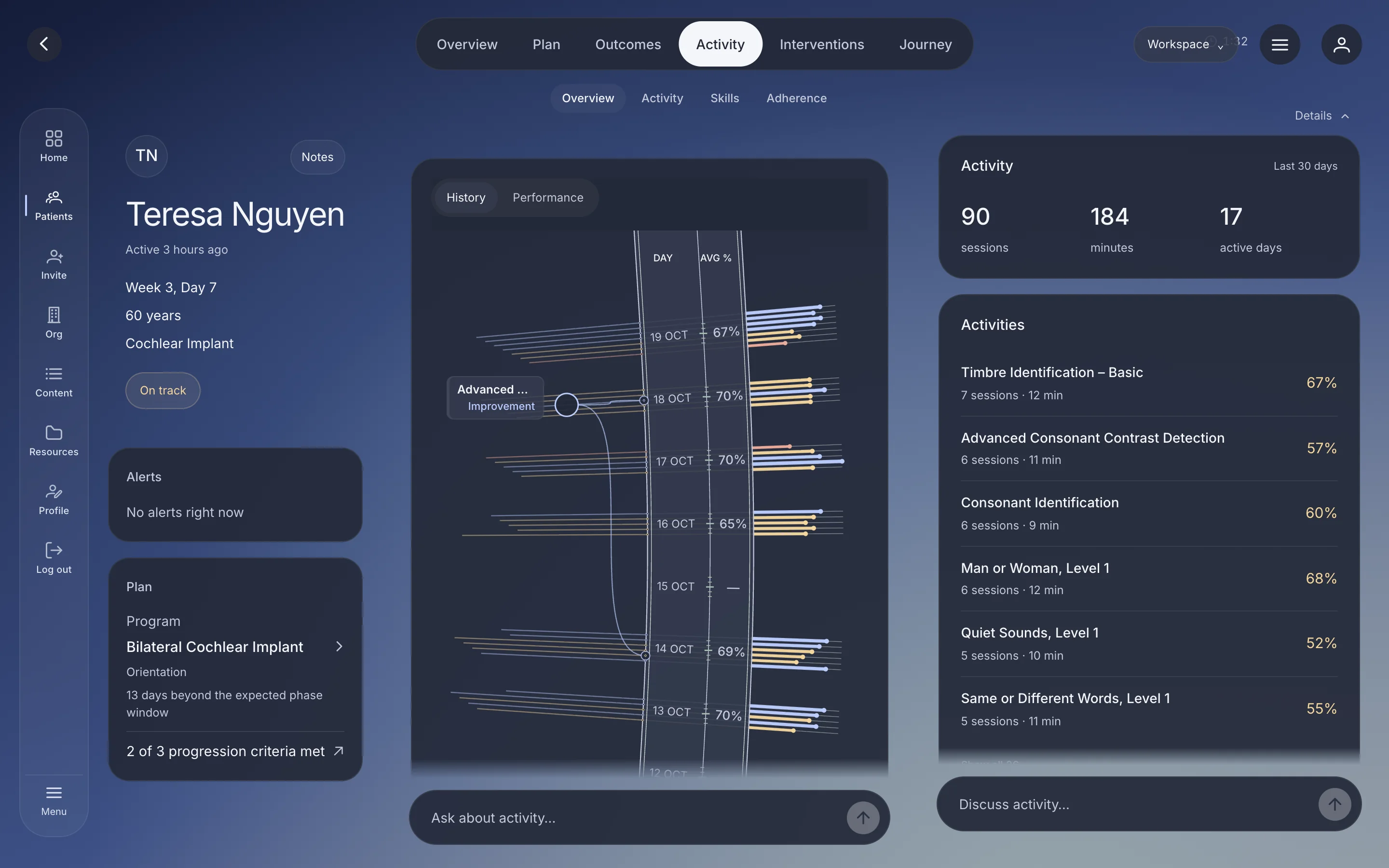
    Neocore Link: a patient's activity view with sessions, minutes, and per-activity accuracy over time
  5. Wellness and maintenance

    Care that extends beyond the visit

    • Care looks at how well someone is doing, not only at what might be wrong.
    • When progress holds, the plan lightens into maintenance. A clinician confirms the change, or the patient does if they manage their own care.
    • If something shifts, care steps back in without starting over.
    For patients

    When I’m doing well, care gives me room.

    For providers

    I can see who is thriving, not only who needs help.

    For loved ones and caregivers

    I can see they’re doing well, and know when to check in.

    Care continuing between clinic visits with app-supported practice
Our design principle

People should be able to engage with their health without having to adopt the identity of a patient.

Most days, nothing needs fixing. Care should step in when it helps and stay quiet when it doesn’t. We measure success by how people live, not how often they open an app.

A father and his adult daughter laughing while they cook dinner together in a bright kitchen

Built to ask for less of your attention, not more

Most apps are designed to keep you tapping. Neocore is designed around clinical need. Every possible message, reminder, or alert goes through one place that decides whether it should reach anyone at all.

What it notices

  • A check-in answer
  • A missed session
  • A sleep diary entry
  • A question from family

What happens

  • A safety concernCare team alerted right away, at any hour
  • Already practiced todayNo reminder sent
  • Asleep or in quiet hoursHeld until a better time
  • Doing wellLighter plan suggested, no extra appointment
  • Clinical need, not engagement

    We don’t measure success by time in the app. A message goes out when it helps someone’s care.

  • Quiet by default

    Nothing during sleep or quiet hours, space between messages, and a daily limit.

  • What’s going well counts

    It weighs how well someone is doing, not only what might be wrong, before involving a clinician.

  • A reason for every decision

    Every message, sent or held back, is recorded with why. Care teams can see why something happened, and why nothing did.

Ongoing care, on your timeline

Recovery and habit change aren’t linear. Neocore is built for the long arc, not just the first few weeks.

For patients

You can always come back. Your program can run indefinitely, and after a while, you may not use the app every day. That’s perfectly fine. When you’re ready, sign in and you’ll pick up with a personalized training plan that meets you where you are.

For providers

Longitudinal programs don’t require constant app use to stay valuable. When patients re-engage, their pathway is still there, so you keep continuity without extra scheduling, and you can focus attention where engagement drops or clinical signals warrant it.

For loved ones and caregivers

You don’t have to carry this alone, and neither do they. With their permission, you can see how things are going and know when a check-in would help.

Start where you are.

Whether you are getting care, giving it, or standing beside someone you love, there is a place for you in the journey.