
Listening after a stroke can be difficult for several reasons. Someone may have trouble hearing a message, understanding language, staying focused or managing fatigue. The useful first step is to ask the care team which difficulties are present and what kind of support fits them. A generic listening exercise may not address the problem the person actually has.1,2
If trouble speaking or understanding is new or suddenly worse, seek emergency medical help. Do not assume it is part of normal recovery or wait to see whether practice helps.3
Is the difficulty with hearing, language or something else?
Ask the clinician to explain the assessment in plain language. Hearing loss and aphasia are different. Aphasia affects language and can involve understanding, speaking, reading or writing. A person may also have a speech movement problem or other communication needs after stroke.1
A useful question is: “What makes this particular conversation difficult?” Bring an example, such as understanding a voicemail, following instructions or talking during dinner. The example gives the team something concrete to investigate.
If hearing has not been considered, ask whether an audiology assessment is appropriate. Existing hearing loss can still matter after a stroke. Turning up the volume is not a complete response to a language problem, and assuming every difficulty is aphasia can overlook hearing needs.1,2
Who should choose the home activities?
A speech-language pathologist can assess communication and recommend suitable treatment or supported activities. An audiologist can advise on hearing evaluation and hearing technology when relevant. The medical and rehabilitation team may also need to coordinate around other needs.1,2
Ask who is responsible for your home plan and whom to contact when something is difficult. If several professionals suggest activities, ask how they fit together. You should not have to resolve conflicting instructions on your own.
Request a demonstration. Try the activity during the appointment using the same kind of support you would have at home. A task that only works when the clinician explains every step needs clearer instructions or adaptation before it becomes home practice.
What real-life goal are we working toward?
“Improve listening” is broad. Try naming a situation you want to handle more comfortably: choosing an outing, understanding a short family update, asking a question at an appointment or following a familiar recipe with support.
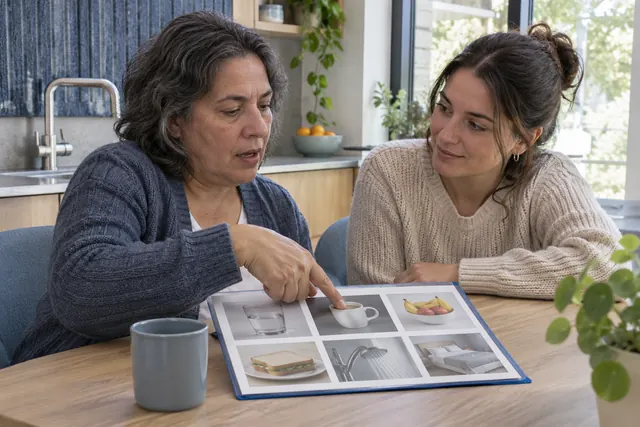
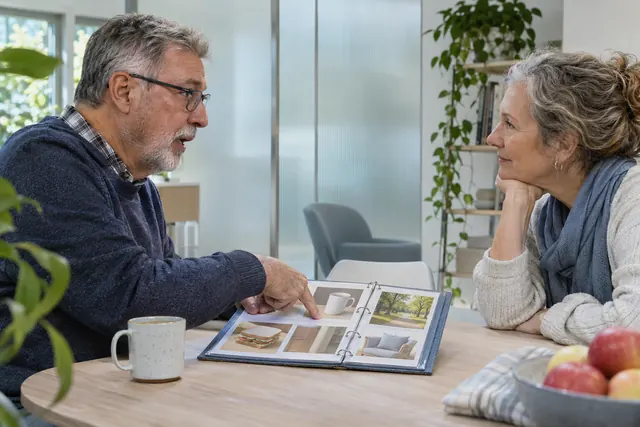
The goal should reflect the person's choice, not just what a caregiver finds convenient. Ask how success will be recognized and which forms of help are allowed. Pointing, pictures, gesture and written key words may be valuable parts of communication.1
An illustrative question is: “Could we practice discussing tomorrow's plans using my calendar and pictures, and then see whether I can help make the actual plan?” The treating clinician should decide whether that activity fits the person's needs.
How much practice is suitable for me?
Ask the team to select the amount, frequency and difficulty for your situation. Include fatigue, other rehabilitation appointments, health conditions, family commitments and personal preferences in the discussion. A universal number of minutes is unlikely to fit every person after stroke.
Clarify when to pause and when to contact the team. Ask whether a shorter or easier version is available for a difficult day. If an activity repeatedly leaves the person distressed or unable to engage, report that rather than simply repeating it more often.
A record can be brief: what was tried, what support helped, and how it felt. You do not need to score every interaction or turn the household into a testing environment.
What should a family member do during practice?
Ask for specific guidance on offering help. Should the partner repeat, rephrase, show a picture, give a choice or allow more time? How should they check that the message was understood? The answer depends on the person's communication profile.1
Agree on how the person can request a break or decline practice. Ask before correcting words or finishing a sentence. During ordinary conversation, connecting with each other may be more important than practicing a particular skill.
Tell the clinician if a task is causing conflict. The difficulty may be the instructions, the level, the timing or the role expected of the family member. That is useful information for adjusting the plan.
Would an app or recording be appropriate?
Ask what the tool is intended to do and whether its task demands match the assessment. Can the person hear the material, understand the instructions, see the display and make the required response? Does it work with any hearing or communication technology they use?
Evidence that a tool helps one population or one skill does not establish that it treats post-stroke aphasia. Speech-language therapy may use technology, but a general listening product should not be presented as a replacement for that care.1
Also ask what happens if the technology fails or becomes frustrating. A paper, conversation-based or clinician-guided alternative may be more accessible for some people.
How will we review progress?
Agree on a review date and a small number of useful observations. Can the person participate more in the chosen situation? Do they need different support? Does the activity feel easier, more worthwhile or less tiring?
Recovery after a nonprogressive brain injury varies. Communication can continue improving beyond the early months, but no home exercise can guarantee a particular pace or outcome.1 If progress is limited, the next step is to review the fit of the plan and other barriers.
Bring these questions to the team in whatever form is accessible: on paper, on a device or through a communication partner. You deserve a plan that explains what to practice, why it matters and how it supports the life you want to take part in.