
A family of experiences, not a single knob
Sound sensitivity is an umbrella for several distinct patient stories. Hyperacusis often involves physical discomfort or pain at levels others tolerate. Misophonia describes selective emotional triggers (commonly eating sounds, nasal breathing, repetitive clicks) with surges of rage or panic. Phonophobia overlaps with anxiety and catastrophic prediction about harm from sound.
Labels help clinicians communicate, but the nervous system does not always respect billing codes. One person can carry hyperacusis traits plus misophonic triggers plus tinnitus; another may have normal thresholds yet find certain textures of sound unbearable because of how they are interpreted.1
Effective care usually blends audiology (safe sound exposure, devices) with psychological skills (habituation, cognitive flexibility, sleep regulation) tailored to the dominant mechanism.13
Bottom-up gain and top-down meaning
Some sensitivity reflects altered loudness coding or heightened central gain after auditory insult or prolonged deprivation, where ordinary sound feels “too much.” Training studies link auditory practice to measurable timing plasticity, a reminder that the system can still learn when pacing is safe.2
Other sensitivity is less about decibels and more about meaning: the same crunch that is neutral to one listener is unbearable to another because of how the brain tags it. Semantic control and selection processes help explain why triggers generalize and why family conflict escalates so fast.4
That distinction matters for treatment. Graduated sound therapy and careful desensitization address different mechanisms than trigger mapping, counter-conditioning, and emotion regulation training. Many people need both lanes coordinated, not a single generic playlist.23
Overlap with hearing loss and cognitive scores
When audiometric loss is present or under-treated, patients may perform poorly on memory or attention tasks for sensory reasons, not because psychotherapy is pointless.3 Fixing audibility can change the whole picture; ignoring it makes every other therapy fight uphill.3
Auditory training reviews emphasize cognitive engagement for generalization, relevant when sound sensitivity coexists with listening difficulty.5
Why unified programs help in real clinics
Fragmented care, one app for masking, a PDF for CBT, ad hoc advice from forums, often fails because it ignores adherence and context. People need a schedule that feels safe, clinicians need visibility, and both need shared language for setbacks.
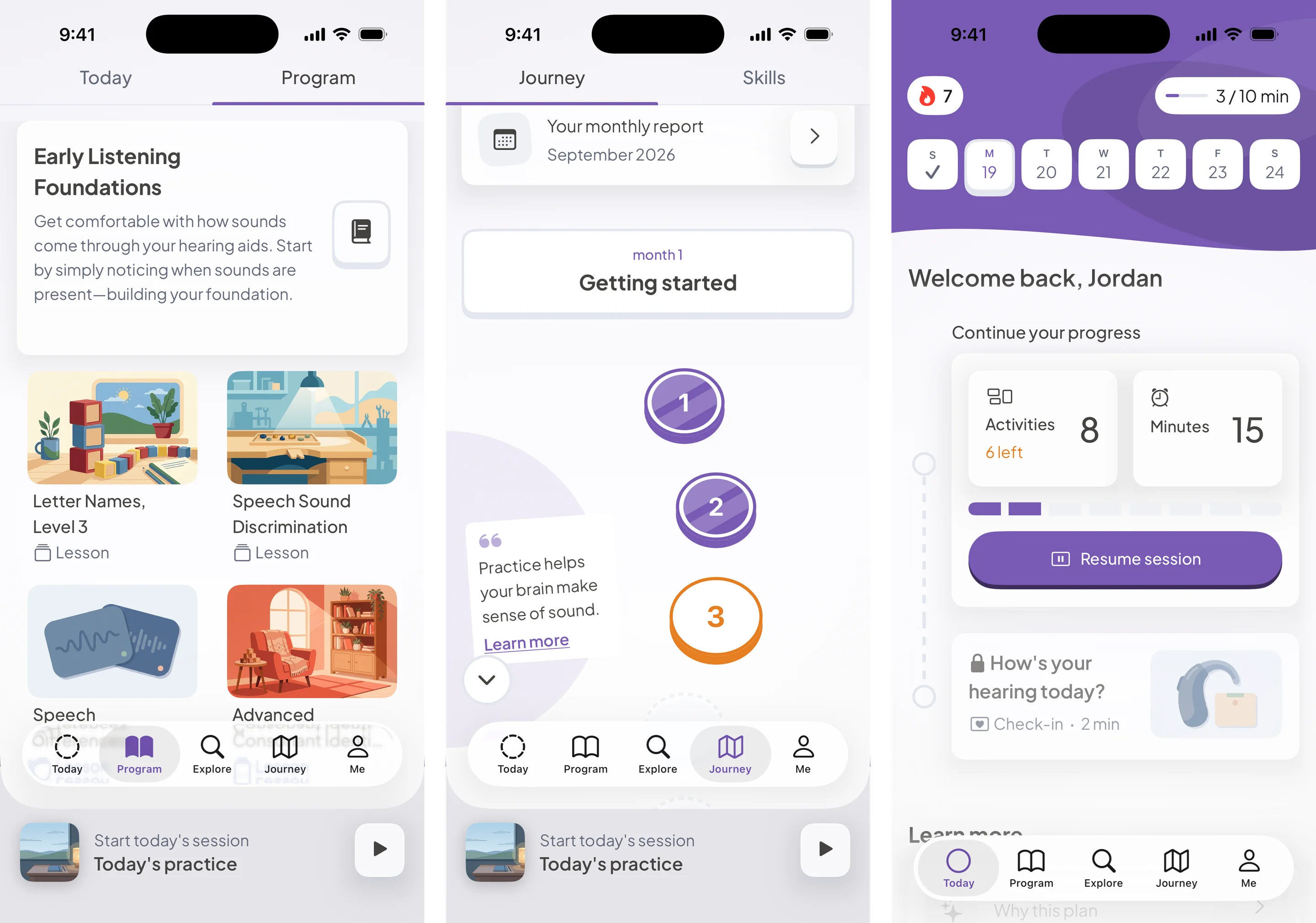
Resona is built for that continuity: structured education, skills, and sound tools that can be paired with clinical judgment rather than replacing it. The goal is not to “tough out” sound; it is to rebuild predictable tolerance and reduce threat appraisal without reckless exposure.13
If sound ever feels sharply painful or you notice sudden changes, seek urgent evaluation. This article is educational, not an emergency guide.1
Practical questions to ask a specialist
Ask whether your symptoms cluster as loudness intolerance, pattern-specific triggers, or anxiety-driven avoidance. Ask how quickly to progress sound exposure and what “too much” should feel like. Ask how sleep, jaw tension, migraine, and ADHD might interact. Each can amplify sensitivity.13
Bring examples: which environments fail first, which sounds are fine at low volume but intolerable close up, and whether hearing tests explain your experience.
Good care feels boring in the best way: measured steps, clear guardrails, and outcomes tracked over time, not a viral hack.1