
Short answer
Yes, for some listeners, under some protocols. Reviews of auditory training emphasize that transfer to speech-in-noise is more likely when training uses speech-like materials, cognitive engagement, and enough practice, not when listeners repeat trivial tasks forever.1
Clinical speech-in-noise metrics such as QuickSIN-style sentence tests exist because patients and clinicians need a functional anchor beyond the booth pure-tone chart.2
Music and rhythm training literature links timing precision and fine-structure encoding to skills that support speech perception under masking, useful context when a program mixes prosody or rhythm work with linguistic tasks.3
Work tying spectral–temporal resolution to speech-in-noise performance underscores why training sometimes improves “understanding” even when the audiogram barely moves.4
Who benefits most
Hearing-aid and cochlear-implant users often have the most to gain when devices restore audibility first, then training targets the residual skill gap.1 Older adults with age-related processing slowing may need more trials and clearer feedback, not because they cannot learn, but because the slope is gentler.4
What to expect
Improvement is usually gradual. Benefits can plateau if tasks never escalate. Combine training with well-fit amplification when loss is present, and track outcomes with speech-in-noise tests or validated self-report when possible.12
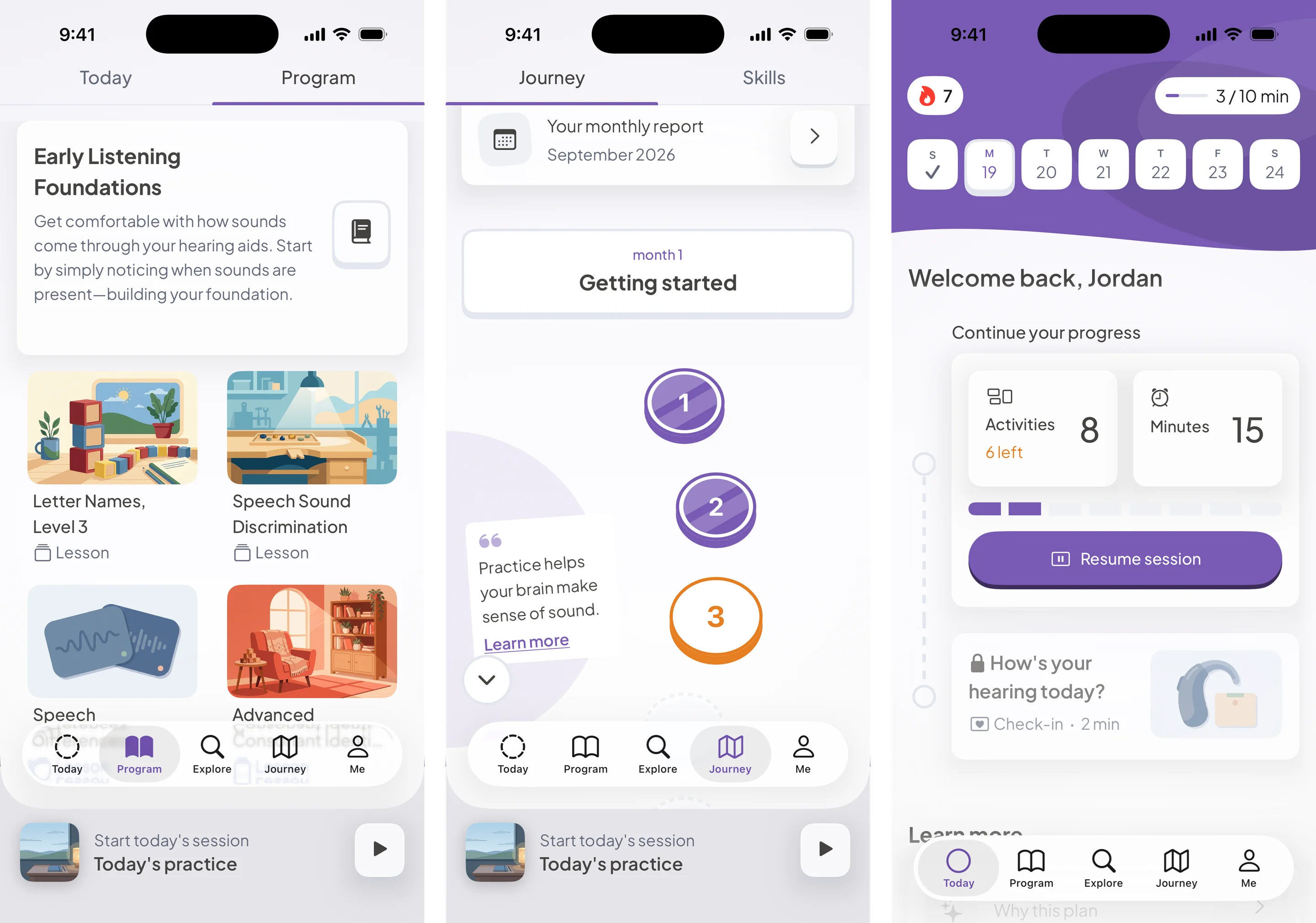
Sonara emphasizes varied listening activities you can repeat in short sessions, closer to the “structured speech + cognitive demand” philosophy reviews describe than to passive sound.1