
No honest single number
Habituation depends on onset, hearing status, anxiety, sleep, sound tolerance, and whether care is structured or ad hoc.1 Psychological interventions with homework tend to show benefits on distress scales over multi-week structured programs, not after one session.2
If untreated hearing loss steals audibility, patients may struggle on cognitive measures for sensory reasons; fixing audibility can change the whole picture.3 Timelines look different when sensory and emotional drivers are disentangled.3
What improvement can look like
Loudness ratings are not the only metric. Sleep, concentration, irritability, and participation often move first.1 A neutral relationship to the sound, without constant threat monitoring, is a valid clinical win even if the percept persists.1
How to tilt things in your favor
Choose structured skills practice over passive apps, keep a simple log, and involve audiology when loss or hyperacusis is present.13 Avoid bravado exposure that spikes anxiety; graduated plans work better for many people.1
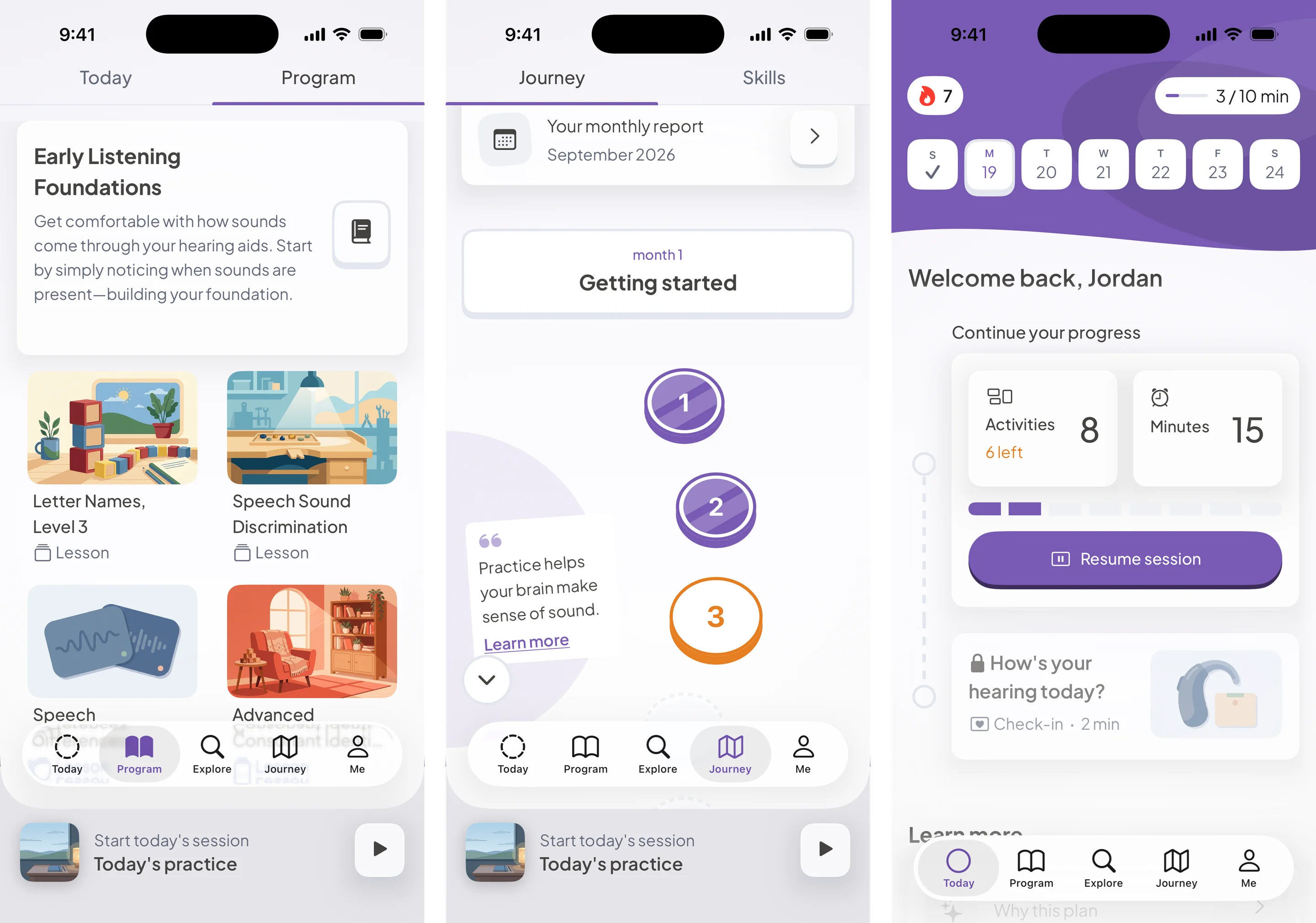
Resona is built for sustained practice and education between visits, not overnight silencing.1