
Resource

What tinnitus treatment can and cannot do

Written by
Neocore TeamNeocore Health
Reviewed by
Neocore HealthClinical content review

Reducing distress and improving life are often possible. Eliminating the percept for everyone cannot be promised.

Calm counseling seating, boundaries of therapy, warm tone.

What it can do

CBT-oriented approaches can lower tinnitus-related distress, improve sleep coping, and reduce catastrophic thinking for many people.1

Structured training and education can improve adherence and skills when designed like serious rehab, not novelty apps. Large cognitive-training trials underscore that durable effects track protocol design and engagement.2

When hearing loss is present, addressing audibility can change the entire cognitive and emotional landscape around tinnitus.3

What it cannot do

It cannot ethically promise silence for every patient or replace evaluation for red-flag causes such as sudden unilateral symptoms, pulsatile tinnitus, or focal neurological signs.1

It cannot ignore hearing loss that should be treated first, or pretend sound alone replaces skills.3

What it depends on

Comorbid anxiety, sleep, sound tolerance, and how consistently patients practice skills between sessions.12

Auditory training reviews remind us that “more sound” without cognitive framing often underperforms structured communication-like tasks when hearing difficulty coexists.4

Where Resona fits

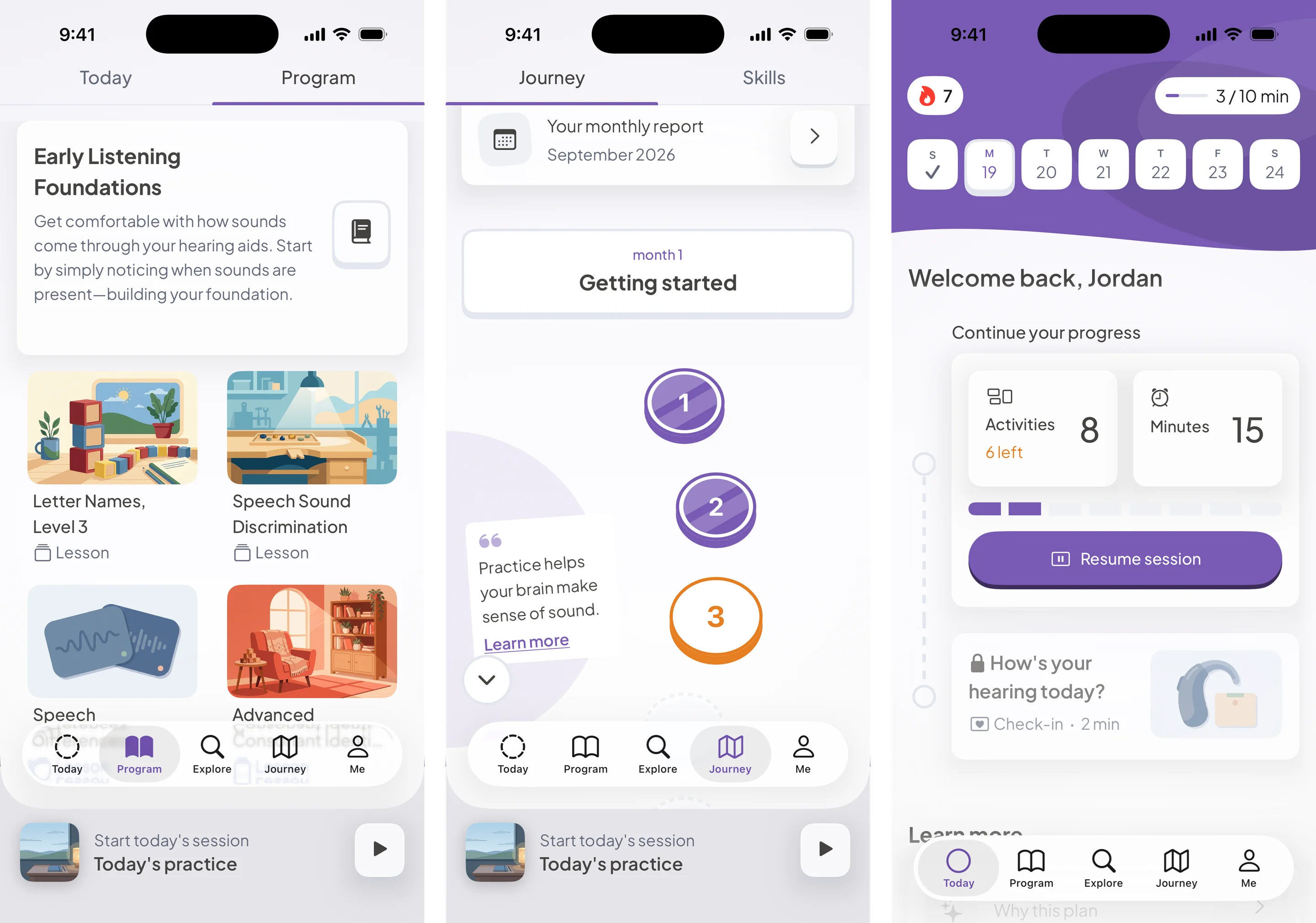
Resona delivers structured content and practice for sound-related distress under clinical judgment, not a DIY cure.1 Neocore Link helps teams see adherence before silent dropout.2


References

  1. Pichora-Fuller, M. K., Kramer, S. E., Eckert, M. A., Edwards, B., Hornsby, B. W. Y., Humes, L. E., Lemke, U., & Lunner, T. (2016). Hearing impairment and cognitive energy: The framework for understanding effortful listening (FUEL). Ear and Hearing, 37(Suppl 1), 5S–27S. https://doi.org/10.1097/AUD.0000000000000312
  2. Ball, K., Berch, D. B., Helmers, K. F., Jobe, J. B., Leveck, M. D., Marsiske, M., ... & Advanced Cognitive Training for Independent and Vital Elderly Study Group. (2002). Effects of cognitive training interventions with older adults: a randomized controlled trial. *JAMA*, 288(18), 2271-2281.
  3. Füllgrabe, C. (2020). On the possible overestimation of cognitive decline: The impact of age-related hearing loss on cognitive-test performance. *Frontiers in Neuroscience*, 14, 454.
  4. Ferguson, M. A., & Henshaw, H. (2015). Auditory training: Can we change the hearing brain? *Seminars in Hearing*, 36(4), 237–249.

Get guided support for tinnitus and sound sensitivity

Resona combines sound therapy with coaching in a plan aimed at turning down distress, not just masking noise.