
Pain is data
If ordinary environmental sounds produce pain or prolonged after-effects, exposure plans must be gentler than generic “just get used to it” advice. Pushing into pain typically reinforces threat appraisal, not tolerance.13
Clinicians often combine protected practice windows with gradual widening of dynamic range, sometimes alongside devices fit for hyperacusis presentations. The exact plan should be individualized.1
Track symptoms after sessions: lingering discomfort is a sign to step back, not to “push through.”1
Graduation, not bravado
Effective rehabilitation looks boring: small increments, repeatable success, and frequent check-ins. That is how the nervous system updates predictions without panic.2
Parallel work on sleep, anxiety, and jaw tension often changes sound tolerance faster than sound alone, because arousal gates how loud things feel.13
Auditory training and listening-effort science remind us that cognitive load interacts with sensory limits; pacing should respect both.4
Overlap you should not ignore
Migraine, TMJ, post-concussion sensitivity, and misophonia can mimic or compound hyperacusis. If you are worsening despite careful plans, reassess overlap rather than doubling exposure volume.3
Where structured digital support fits
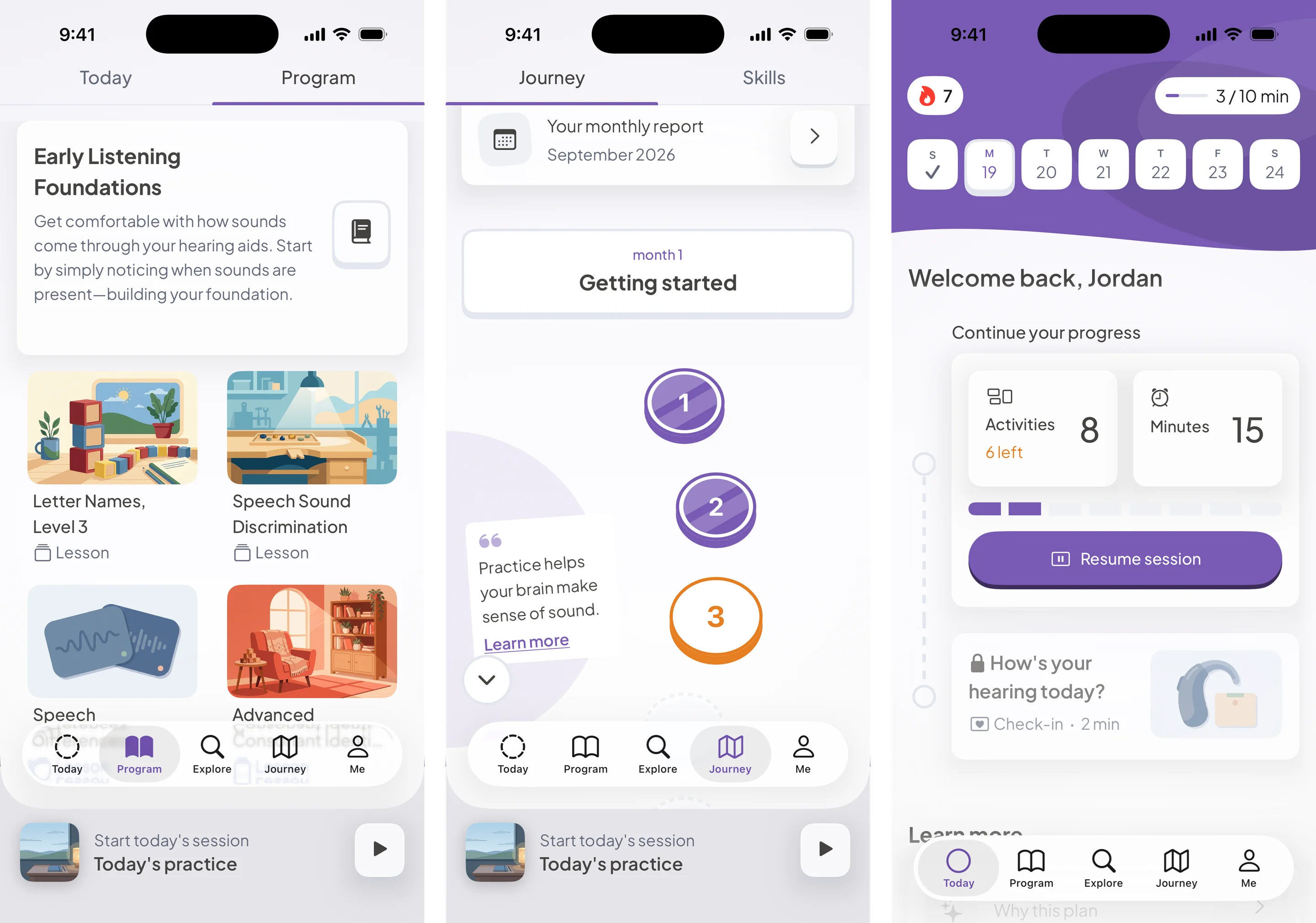
Resona emphasizes skills, education, and pacing, not random noise exposure. Complex cases still belong under audiology and behavioral health judgment.1
Red flags
Sudden hearing change, acute pain with infection signs, or post-traumatic symptoms belong to urgent pathways. This guide is educational, not a protocol for every etiology.1