
The system shape
Audiology excels at diagnosis and device fitting. What fee-for-service systems rarely fund is the hundreds of short, goal-directed trials that perceptual learning requires.1 Reviews of auditory training keep returning to the same practical theme: outcomes depend on dose, task design, and whether exercises resemble real communication, not on a single inspirational handout.1
Patients leave the office with advice to “practice listening.” Without structure, that collapses into background television or nothing at all. Meanwhile, cardiology and diabetes care long ago made remote monitoring and between-visit homework ordinary.2
Listening effort is not a mood. It is a measurable cost. Pupillometry work in hearing-aid users shows training can reduce effort even when accuracy looks flat, which means “I still miss words” and “I am less wiped out” can diverge in instructive ways.2
Why the first wave of “apps” did not fix rehab
Consumer apps optimized for downloads, not outcomes. Clinics had no visibility into adherence, so visits stayed guess-based. Evidence-based training protocols, by contrast, assume supervision, progression, and endpoints you can track.1
Neuroplastic engagement with amplified speech is associated with adaptive processing changes when patients use hearing aids consistently in meaningful contexts, not when devices sit in a drawer.4 The system has to make consistent use realistic.4
What changes now
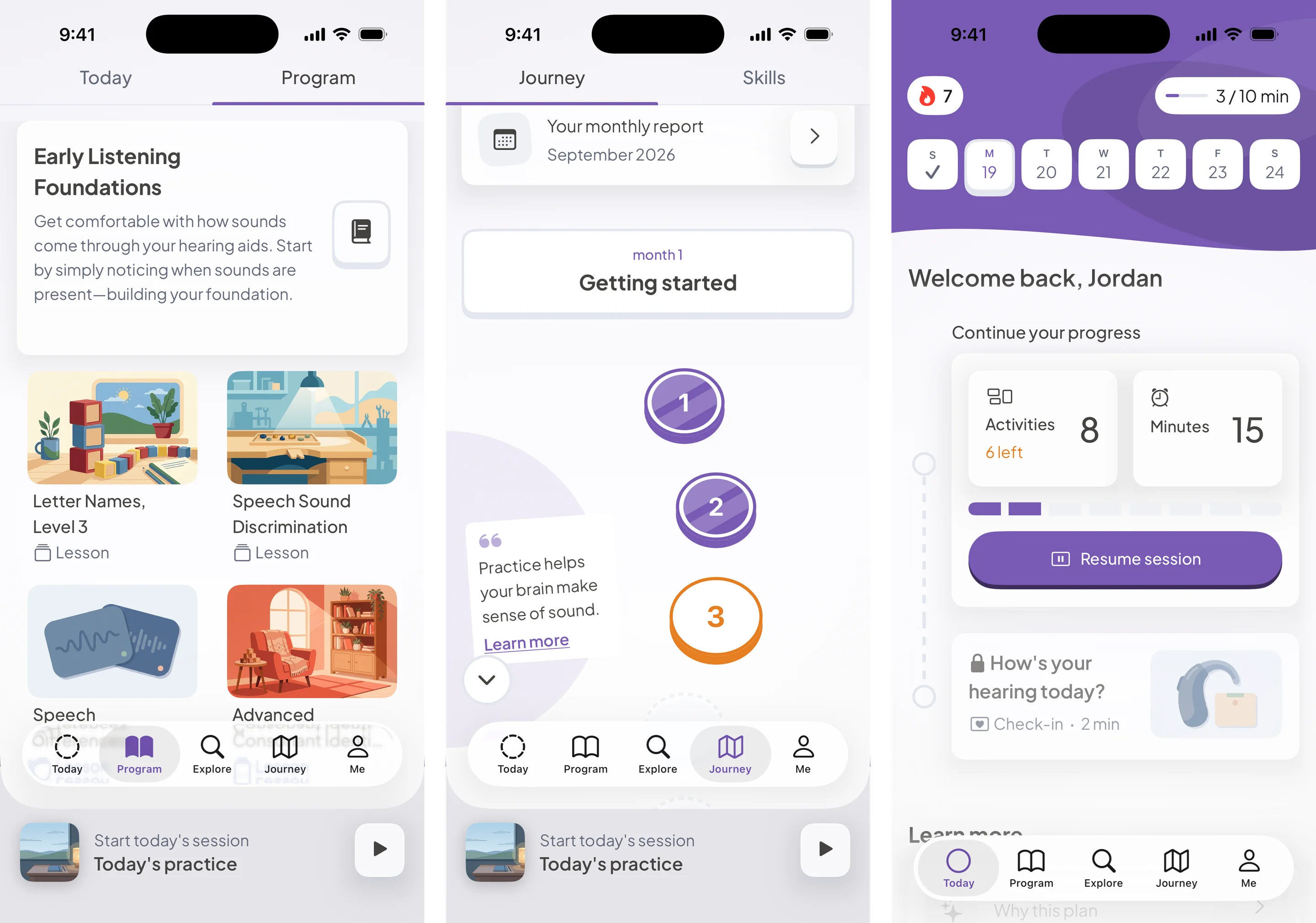
Structured patient programs plus clinician dashboards turn rehabilitation into a longitudinal protocol: assign listening work, see completion, adjust difficulty, and escalate early.12 That is fundamentally different from episodic counseling that pretends homework happened.1
FUEL and related effort models give shared language for why patients tap out of restaurants and phone calls, and why rebuilding skills requires repeated successful trials, not lectures.3
Neocore’s bet is simple: Sonara and Resona are the practice surfaces; Neocore Link is how serious clinics run adherence, messaging, and monitoring without inventing ad hoc spreadsheets.12