
Audibility first
You cannot understand what you cannot hear. Hearing aids restore audibility and reshape dynamics and noise management, but they cannot invent missing inner-ear function.1 Consistent use matters because neuroplastic engagement with amplified speech is associated with adaptive processing changes when listeners live in real speech, not drawers.1
Why “understanding” can lag behind “louder”
Speech in noise requires selective attention, prediction, and lexical competition; degraded signals tax those systems.3 That is why two people with similar charts can report different real-world success.3
Effort, training, and the full picture
Pupillometry studies show structured auditory training can reduce listening effort for hearing-aid users even when accuracy is stable, evidence that “I still get words” and “I am exhausted” diverge in measurable ways.2
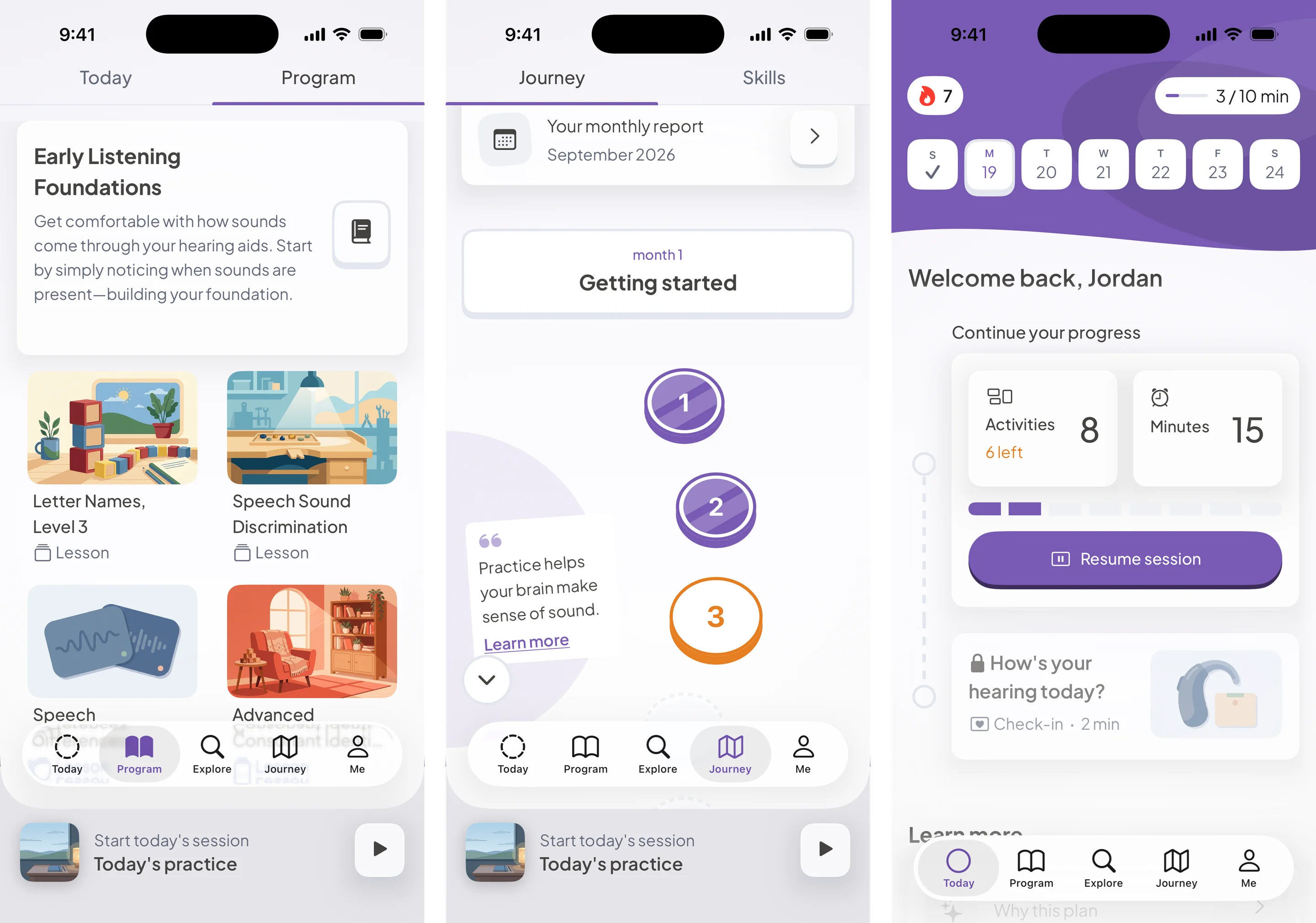
Auditory training reviews argue transfer is more likely when tasks resemble communication and include cognitive demand, not endless tone games.4 Sonara targets that skill side while your audiologist optimizes the device side.4