
Why home hours matter
Cochlear implants provide access, but the brain still has to learn the new code, especially for music, unfamiliar talkers, and noisy places. Clinic time is finite; rehabilitation gains often track with how many careful listening trials happen between visits.12
Pediatric and adult literature both emphasize staged training: establish detection and discrimination, then climb toward linguistic tasks where context and inhibition matter.1
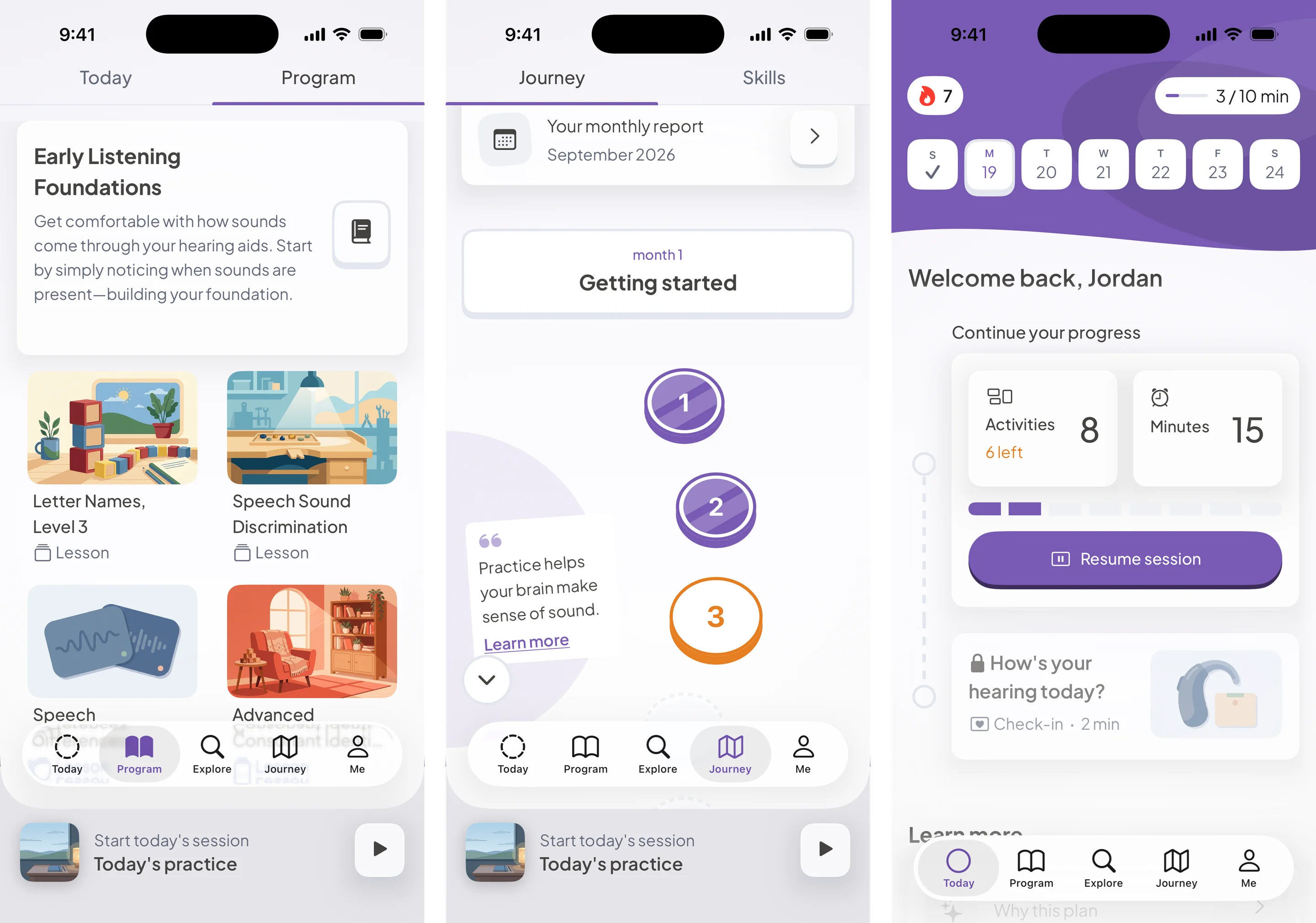
Home programs work when they are specific: targets, duration, and difficulty that your team can adjust with data, not vague advice to “listen more.”2
What good tasks look like
Early tasks might emphasize vowel contrasts or word minimal pairs; later tasks layer talker variability, sentence context, and competing messages. The through-line is progressive challenge with feedback.2
Semantic competition tasks illustrate why advanced training is not only “louder words”: listeners must juggle plausible meanings, which mirrors real conversation and executive demands.3
Reviews remind us that transfer is more likely when training resembles communication and recruits cognitive control, not only low-level detection.4
Caregivers, motivation, and realistic pacing
If you are a clinician coordinating home work, align expectations with caregivers: celebrate small wins, log struggle points, and avoid shame spirals on bad days.1 Fatigue is normal; shorter sessions on hard days beat quitting entirely.2
Pairing with clinic care
Remote tools should surface adherence and performance trends to the care team, not hide them. That visibility is how mapping, counseling, and training stay synchronized.2
Neocore Link is the operational layer for teams that want enrollments, messaging, and monitoring alongside patient apps like Sonara.
Urgent device problems (pain, sudden change in hearing, head trauma) belong to your implant center, not a blog article.1