The frequency problem
Plasticity is use-dependent. Training studies in older adults link auditory practice to faster neural timing along brainstem and cortical routes, changes that accumulate with repetition, not with a single heroic session.1 Auditory training reviews echo the same practical conclusion: sporadic practice rarely produces durable transfer.2
If real-world listening statistics are “two clinic visits per year,” the auditory system mostly experiences waiting rooms, not cocktail parties. That is not a moral failure; it is a sampling problem.2
Consistent engagement with amplified speech in meaningful contexts is associated with adaptive neuroplastic changes in hearing-aid users, again pointing at everyday statistics, not one-off appointments.3
What continuous care is not
It is not infinite texting. It is not surveillance for its own sake. Continuous care means a planned thread between visits: assigned tasks, visible adherence, outcomes tied to speech and participation, and escalation paths when patients plateau or struggle.2
Speech unfolds in time; cortical oscillations align to rhythm and syllable structure in ways that laboratory work ties to parsing continuous sound.4 Practice that never varies timing, talker, or context under-trains the very dimensions conversation requires.4
Operationalizing continuity
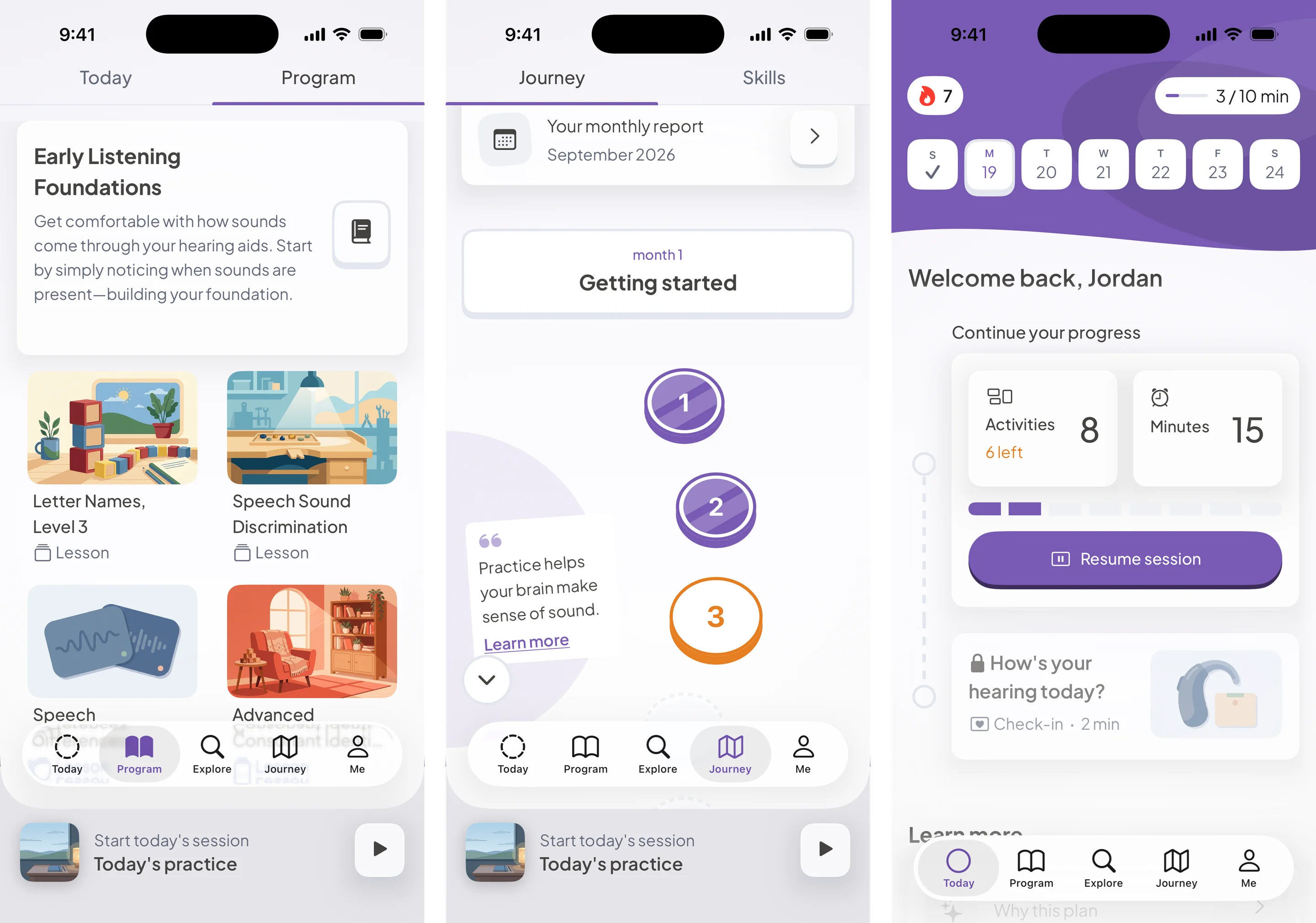
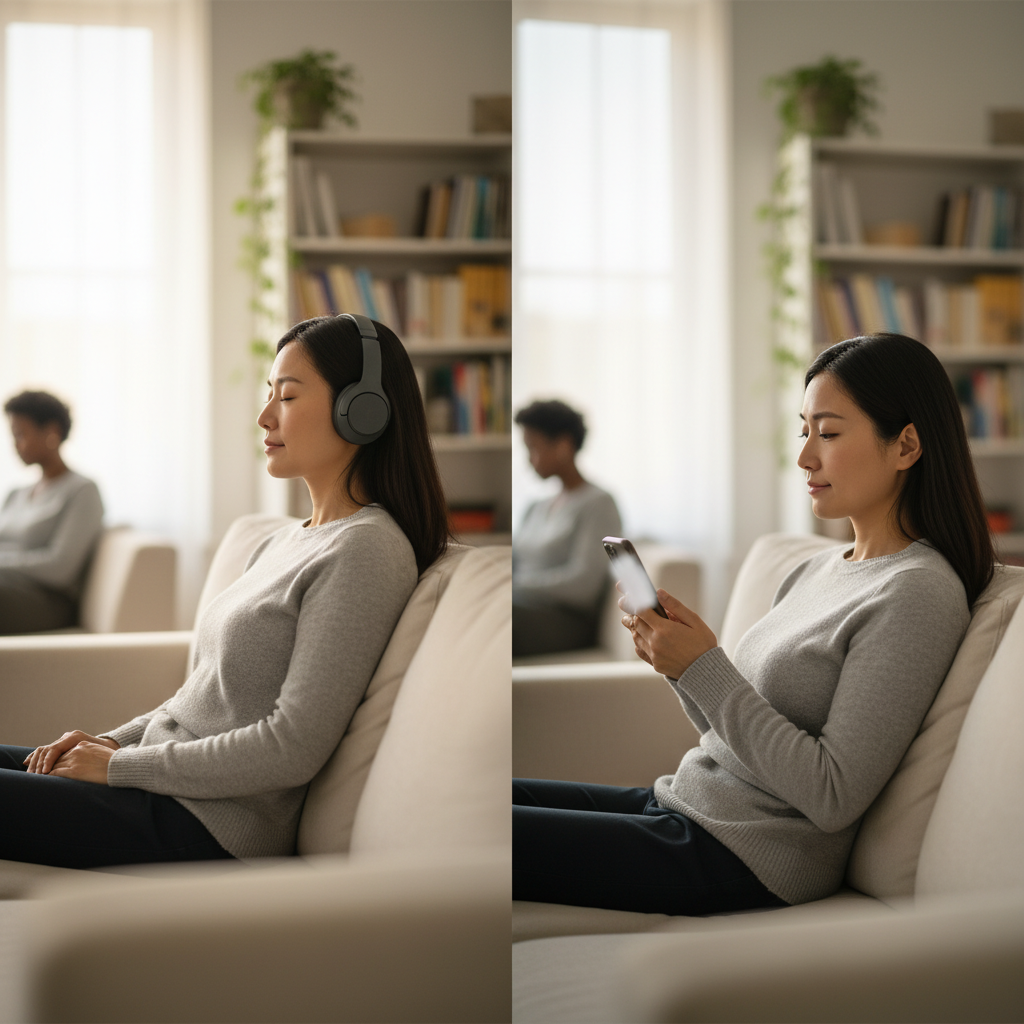
Clinics need enrollments, standardized homework, and monitoring that fits workflow, not a pile of consumer apps that do not talk to the chart.2 Patients need short sessions they can complete on phones and computers, with feedback that teaches rather than shames.2
Sonara and Resona are designed as those practice layers; Neocore Link is the operations layer for teams that want continuity without building it from scratch.2