
Start with mechanism and comorbidity
Tinnitus is not one disease. It can accompany hearing loss, sound intolerance, TMJ issues, head injury, medication exposures, anxiety, or sleep disruption. Treatment that ignores context tends to fail, even when the brochure sounds scientific.14
Clinicians often begin with hearing evaluation and remediation when loss is present, because improved audibility can change the signal-to-noise relationship patients experience internally and reduce listening strain.4
Psychological therapies target distress and hypervigilance loops; sound therapies aim to reduce contrast and support habituation. Many people need both.1
Evidence-graded options
CBT and related counseling approaches have among the stronger randomized trial evidence for reducing tinnitus-related distress and improving quality of life, not necessarily eliminating the percept.1
Structured training literature reminds us that sustained, well-designed protocols can produce durable skill changes; the lesson transfers by analogy: one-off tips rarely beat a coached program with homework.2
Auditory training reviews emphasize that benefits are more likely when tasks resemble communication and include cognitive demand, relevant when tinnitus coexists with hearing difficulty.3
Experimental neuromodulation and pharmaceuticals remain promising for subsets; they should be framed honestly as evolving, not as guaranteed cures.1
Sound therapy and hearing devices
Sound enrichment can be part of a broader plan, especially when paired with counseling and when hearing loss is treated appropriately.1 The goal is usually not “drown it out forever” but reduce contrast and support habituation skills.1
Where digital programs fit
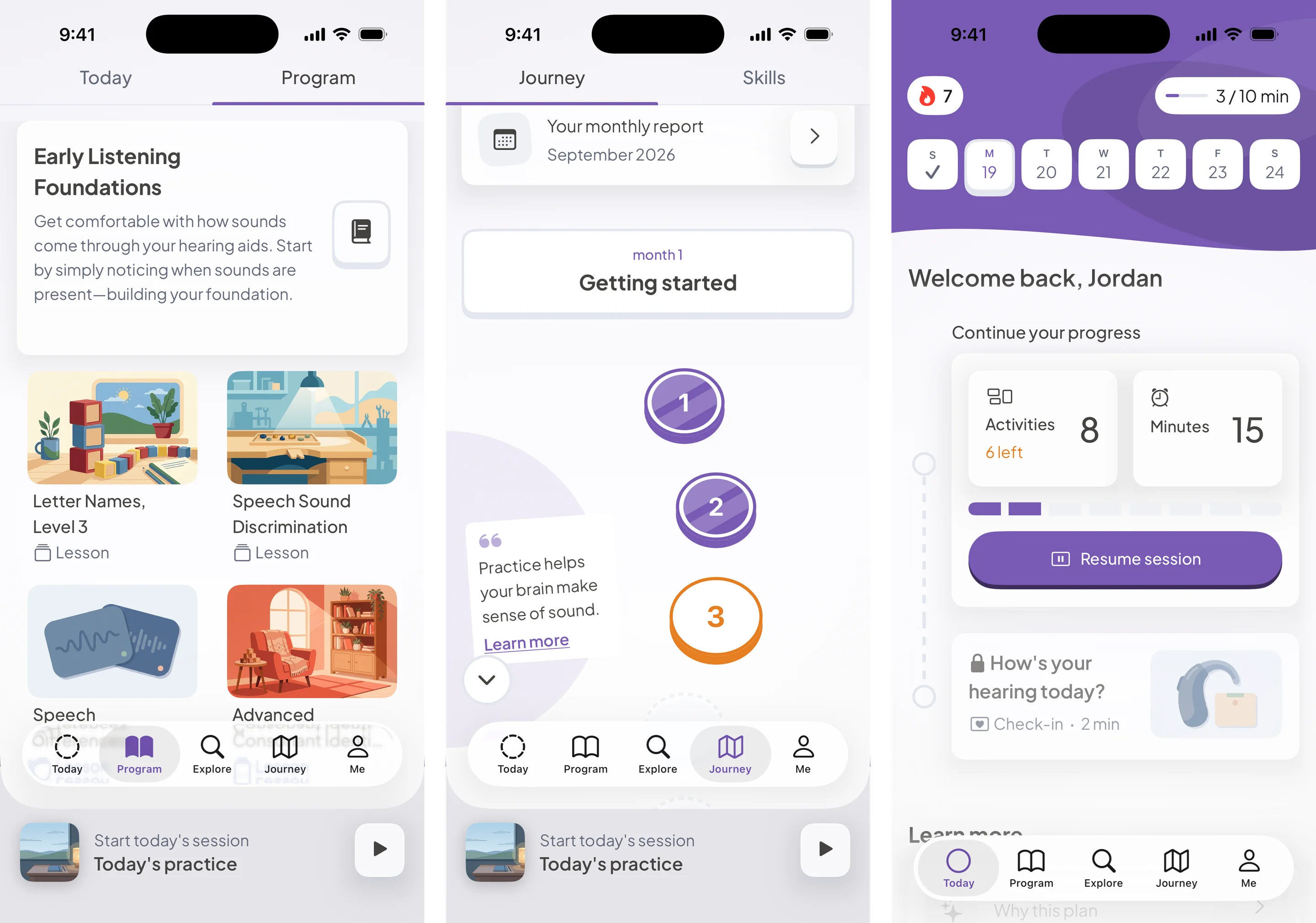
Apps fail when they promise miracles, hide costs, or offer passive sound without skills. They succeed when they scaffold adherence, teach regulation, and keep clinicians in the loop for escalation.2
Resona is built as structured education and practice for sound-related distress, not a replacement for diagnosis or in-person therapy when that is indicated.1
Red flags
Sudden unilateral tinnitus, pulsatile tinnitus, neurological symptoms, or asymmetric hearing loss deserve prompt medical evaluation, not app triage.1