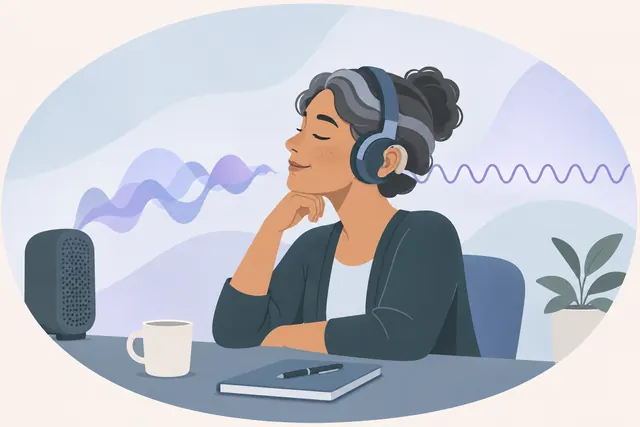

Aural rehabilitation is support for living and communicating with hearing loss. It can include hearing technology, learning to use that technology, listening practice, communication strategies and help with the everyday effects of hearing difficulty. The plan should reflect your priorities, hearing needs and preferences. It is broader than a set of listening exercises.1
A good starting question is: “Which conversation or activity would you like to make easier?” Your answer helps the care team decide what to assess, what to try and how to judge whether the plan is useful.
What can aural rehabilitation include?
Different people need different combinations of support. Someone adjusting to a first hearing aid may want help with device handling and family conversations. A person with a cochlear implant may need support learning to interpret the sound it provides. Another person may already use their devices confidently but still struggle in meetings.
Hearing assessment and a clear explanation
An audiologist can assess hearing and discuss suitable care. An ear, nose and throat specialist can investigate medical conditions affecting hearing. Speech-language pathologists may contribute communication or language support when appropriate. Your primary care clinician can help you find the right service.2
Ask the clinician to explain what the tests show, what they cannot explain and how the results connect with your experience. A hearing test is useful information, but “I cannot follow my grandchildren at dinner” deserves attention in its own right.
Hearing technology and follow-up
Hearing aids make sounds more accessible, but they do not restore normal hearing. Background noise can remain difficult. Follow-up may involve checking fit, comfort, device function and the settings used in different places.3
For eligible people, cochlear implants are another option. Their sound differs from natural hearing, and rehabilitation is part of learning to use that information. Assessment and follow-up belong with an implant team.4
Other tools can support a specific situation. Depending on compatibility and need, options may include a remote microphone, television listening equipment, captions, accessible telephone services or alerting devices. A clinician can help select and try suitable tools rather than adding equipment without a clear purpose.5
Listening practice
Auditory training is structured practice with listening tasks. It is one possible component of rehabilitation, not another name for the entire care plan. Activities may involve speech sounds, words, sentences or listening in controlled background noise.
Ask what the activity is intended to help, whether it is suitable for your hearing and devices, and how progress outside the exercise will be discussed. Completing a harder exercise does not by itself tell you whether dinner conversations have become easier.
Communication strategies and partner support
You can also change how a conversation happens. Face the speaker. Reduce competing sound when possible. Ask people to take turns. Request a rephrasing when repetition does not help. Agree on a simple way to signal that part of a message was missed.3,5
Communication partners can take responsibility too. A partner might get your attention before speaking or write down an appointment time. Rehabilitation should not make you solely responsible for solving every difficult interaction.
How a personal plan takes shape
Bring a few situations that matter to you. Specific descriptions are more useful than a general wish to “hear better.” For example:
- “I want to follow the first ten minutes of my book group.”
- “I miss what my partner says from another room.”
- “I can follow a television program but lose the dialogue when music starts.”
- “I want to manage phone appointments independently.”
For each situation, discuss the setting, the people involved, what already helps and what you would prefer to change. You may value comfort, less effort or more independence as much as hearing every word.
The team can then help you choose a manageable next step. That may be a device review, a different seating arrangement, a communication agreement, a selected practice activity or a combination. A useful plan also names when you will review the result.
An example: making a family meal easier
Consider this illustrative example. Morgan uses hearing aids and wants to participate more comfortably at a weekly family lunch. Several people speak at once, the television stays on and Morgan often stops joining in.
A plan might begin with checking whether the hearing aids are working as intended. The family could then try turning off the television and keeping one conversation at a time. Morgan might choose a seat with a clear view of the people they most want to hear. If appropriate, the audiologist could discuss additional listening technology.
The outcome is not simply “used the device” or “finished an exercise.” Morgan might report whether they joined the conversation more often, needed fewer repeated questions, or felt less exhausted afterwards. Those observations can guide the next discussion.
This example is not a treatment prescription. It shows how one goal can connect hearing access, the environment and shared communication habits.
What should you expect from appointments?
At an initial appointment, ask who is coordinating the plan and whether anyone else should be involved. You can request written instructions, captions, an interpreter, a quiet setting or a support person of your choice.
Before leaving, try explaining the agreed next step in your own words. This is a check that the instructions are clear, not a test of you. If you will use a new tool, ask to practice the actual task you need at home, such as connecting to a television or changing a battery.
Follow-up is the place to discuss both benefit and difficulty. Useful notes include where a strategy helped, where it failed, whether sound was comfortable and whether the routine was realistic. Do not wait until you have a perfect record before asking for help.
How long does aural rehabilitation take?
There is no single timetable for everyone. Needs differ by hearing history, device use, communication goals and other circumstances. Some questions can be addressed in a focused visit; other goals require repeated adjustment and support.
Ask your team what they recommend for your current goal and what would trigger an earlier review. If home practice is included, the amount and difficulty should be selected with you. More practice is not automatically the right response to discomfort, device problems or a task that does not fit your needs.
A new sudden loss of hearing is different from an ordinary rehabilitation challenge. Seek urgent medical assessment rather than waiting for your next practice session or routine appointment.6
Questions to bring to your care team
Ask: “What is the main barrier in this situation?” and “Which part of the plan addresses it?” Then discuss how you will know whether the change helped. You can also ask about access, cost, travel, technology requirements and alternatives if a proposed option is difficult to use.
Aural rehabilitation should leave you with a practical way forward: a meaningful goal, understandable support and a chance to revise the plan as you learn what works in your daily life.