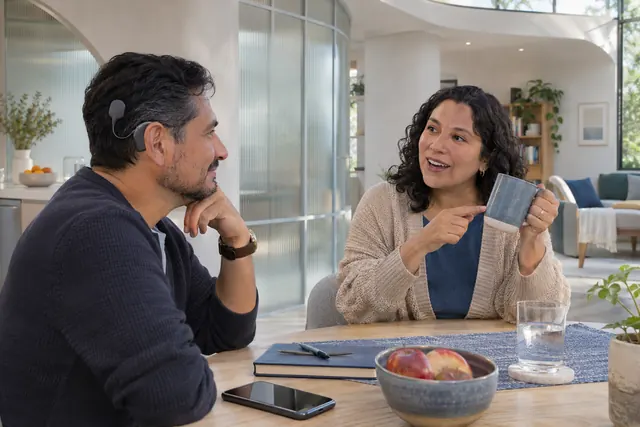

The first weeks after cochlear implant activation are a period of learning: how to manage the equipment, what the new sound is like, and how to communicate while your team adjusts the plan. There is no single correct first-day experience or timetable for understanding speech. An implant provides a different representation of sound, and people learn to interpret it in different ways.1
Your early priorities are practical. Know how to use and care for the processor, attend the follow-up appointments your team recommends, and keep communication accessible while you explore listening.
Activation begins a process
Activation is the point at which your external processor is set up to deliver sound through the implant. It is followed by ongoing assessment and programming, sometimes called mapping. Your team uses information about your hearing and experience to guide those adjustments.2
The sounds you hear initially may be unfamiliar. Some people can recognize speech quickly, while others begin with awareness of sound or find speech difficult to interpret. An emotional reaction is also personal: curiosity, relief, disappointment, uncertainty, or several feelings at once can be part of the experience.
A dramatic activation clip cannot tell you how your rehabilitation should proceed. It shows one moment for one person, often without their hearing history or later follow-up. Ask your own team what they will look for over time.
Leave the appointment with a usable plan
Before going home, ask someone on the team to watch you demonstrate the tasks you will need. These may include attaching and removing the external equipment, charging or changing the power source, selecting the advised program, and checking the basic connection.
Request instructions in a format you can access. Written directions, pictures, captions, or a support person you have chosen can be helpful. A spoken explanation alone may be difficult to remember during a busy appointment.
Confirm the plan for wearing the processor and for any changes between programs. Your team should individualize that guidance. Also clarify what to do with a hearing aid or implant on the other side. Do not infer that one online practice routine applies to your device combination.
Keep a contact number or approved messaging route for technical problems and clinical concerns. Know which problems can wait for a routine appointment and which should prompt earlier contact.
A realistic first-week example
The following example is a planning illustration, not a prediction or a prescribed schedule.
On an early day at home, your main achievement might be getting the processor ready independently and identifying what you need to ask at follow-up. You could spend a quiet moment noticing an ordinary household sound while looking at its source. Later, you might use a brief conversation with a familiar person, keeping written or visual support available.
On another day, the useful activity might be a short recording with matching text. If it feels confusing or tiring, return to simpler material or stop. You do not need to prove progress by completing a certain number of tasks.
If your team has assigned particular exercises, those instructions take priority over a general example. Tell the team if the suggested routine does not fit your comfort, energy, or home circumstances.
Keep a short sound-and-situation log
A few precise observations are more useful than trying to score your entire day. Note the situation, the setup if known, and the experience.
For example:
- “The room is quiet. I can tell when my partner starts talking, but the words are not clear yet.”
- “I understood a familiar phrase with the person’s face visible.”
- “The streaming connection works, but I need help using it for calls.”
- “The equipment feels uncomfortable after wearing it.”
These are illustrative notes, not expected milestones. Include what helps and what feels difficult. Your clinician can use the information alongside formal testing and device checks; you do not have to interpret the cause yourself.
Make everyday communication accessible
Continue the methods that let you understand and participate: sign language, captions, writing, speechreading, or a combination. Important information should remain accessible even when a listening activity is challenging.
Tell family or colleagues what would help now. An example is, “Please get my attention first and write down any changes to the appointment time.” This gives them a clear action without requiring you to explain the technology repeatedly.
Plan for telephone calls, doorbells, and safety alerts. Assistive and alerting devices provide additional options, depending on your needs and equipment.3 Do not assume that recognizing an alert during practice guarantees that you will hear it in every room or when the processor is off.
Give programming appointments concrete questions
At follow-up, ask how your current results compare with your own starting point and which goal comes next. Mention any change in comfort or sound and bring the processor and accessories the clinic requests.
Useful questions include: Which program should I use in this situation? Is this activity appropriate yet? How should I handle fatigue? What is the plan for the other ear? How will we judge whether communication is becoming easier?
Avoid changing clinical settings or magnet strength yourself. Contact the implant team for pain, redness or irritation around the implant.4 Ask the team about equipment problems, too. Follow the surgical team’s instructions for wound concerns and other postoperative symptoms.
Look for useful changes, not a deadline
Early progress may be recognizing a sound, managing equipment, asking for a specific repeat, or identifying a communication setup that works. Those changes matter even if speech understanding is still developing.
There is no requirement to feel positive about every session. Tell the team if expectations and experience do not match. They can explain what is known, investigate concerns, and adjust the rehabilitation plan.
For the next visit, bring one listening example, one equipment question, and one situation you want help making accessible. That gives the first weeks a clear direction without turning them into a race.