A hearing rehabilitation checklist can help a caregiver organize practical support without taking over. Start by agreeing on the role the person wants you to have. Then focus on communication, access to appointments, any agreed home practice and questions for follow-up.
Aural rehabilitation can include devices, communication strategies, listening practice, counseling and support for daily participation. The combination should reflect the person's needs and goals.1 The checklist below is an original planning aid, not a test of independence or a measure of treatment success.
Before you begin: agree on support
Ask which tasks the person would like to do themselves and where help would be welcome. Permission to help charge a hearing aid does not automatically mean permission to read health messages or receive every progress report.
Use these prompts together:
- What conversation or activity matters most right now?
- What help would be useful this week?
- What would feel intrusive or unnecessary?
- Who may receive information, and what may be shared?
- When should we check whether this arrangement still works?
Write down only what is useful. “Help me remember my appointment questions” is a complete and reasonable role.
Make everyday communication accessible
Review one difficult situation rather than trying to improve every conversation at once. For example, the person may want family plans discussed in the same room instead of shouted from the kitchen.
Check whether you can get their attention first, keep your face visible, reduce competing sound and provide key details in their preferred format. When a message is missed, offer a rephrasing or written information and ask which helps.2
Include the environment in the plan. A captioned call or a quieter table may be more helpful than asking the person to concentrate harder. Assistive listening and alerting options can be discussed with the hearing team.3
Prepare for appointments together
With permission, help collect the information the clinician needs:
- The person's main priority and examples of difficult situations.
- Questions about hearing changes, tinnitus or device comfort.
- Relevant devices, chargers, accessories and previous instructions.
- Information about communication access needed for the visit.
- A plan for transport, cost questions and follow-up contact.
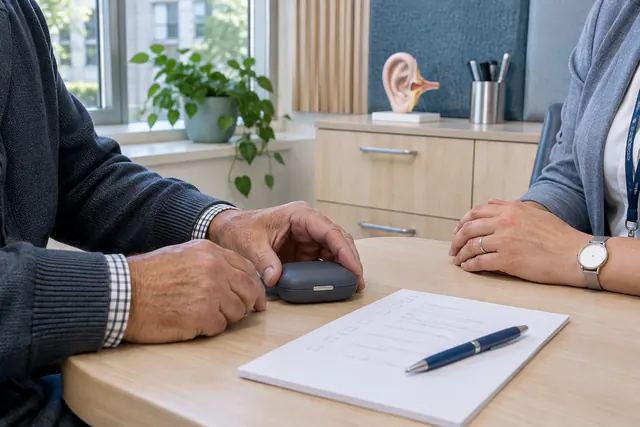
Agree whether you will attend, take notes or stay available outside. Ask the clinician to address the person directly. Before leaving, confirm the next step in an accessible format and make sure the person knows whom to contact with questions.
Help with devices only in the agreed role
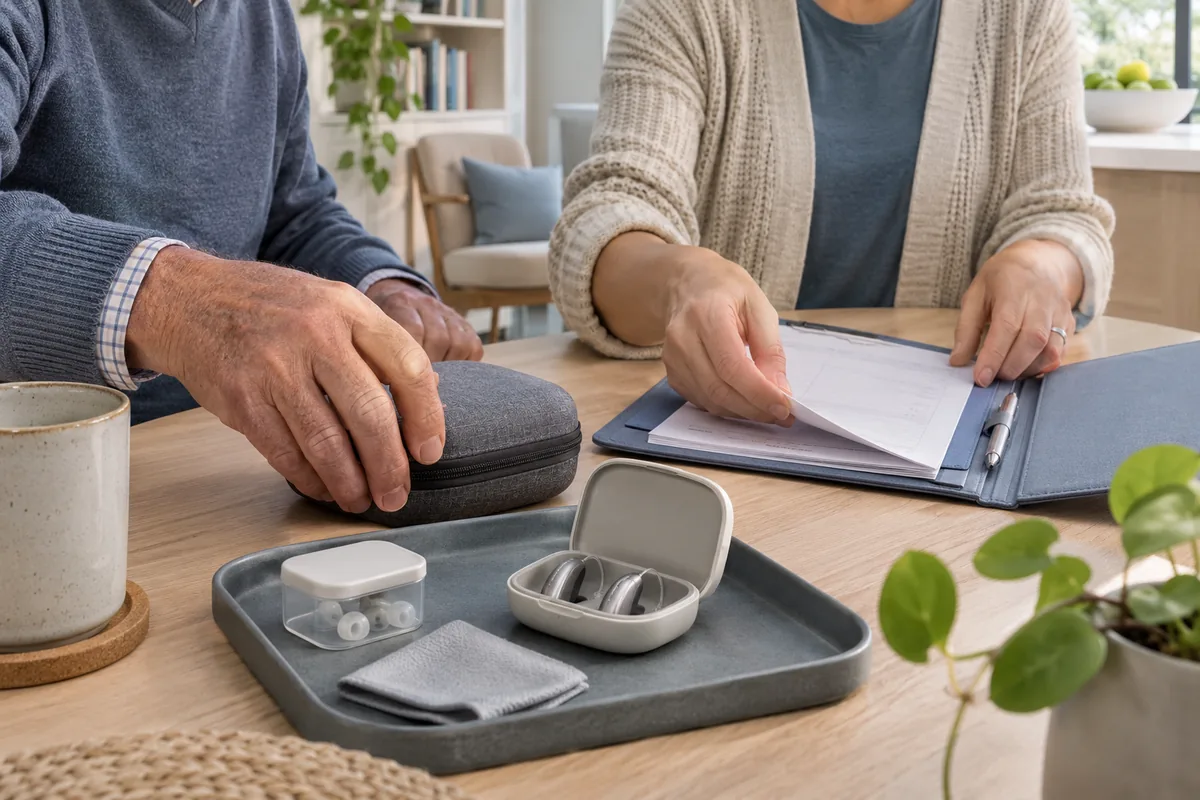
If device support is requested, use the manufacturer's and clinician's instructions for cleaning, charging, batteries and storage. Ask for a demonstration if handling is difficult. Small batteries and devices should be kept away from children and pets.4
Check for problems rather than treating device use as a compliance target. “What feels uncomfortable?” is more useful than “Why aren't you wearing it?” Hearing aid adjustment and follow-up may be needed when sound, fit or background noise remains troublesome.4
A caregiver should not change clinical settings, attempt repairs beyond the instructions or dismiss a new hearing change as a device problem.
Support a home plan that fits ordinary life
If the person has a clinician-selected practice plan, ask what support they want. You might help set up materials, take turns in an activity or provide a quiet space. Agree on who starts the activity and how the person can end it.
The clinician should individualize the activity, level, duration and review plan. A caregiver checklist should not supply a universal dose. More time spent does not, by itself, establish better real-life listening.
Record a small amount of useful context if the person agrees: the activity tried, what was difficult, what felt uncomfortable and whether the target conversation became easier. Do not turn a missed session into a reprimand or add extra practice to compensate without discussing the plan.
Bring observations back to the care team
Keep observations specific and separate them from conclusions. “We could not connect the microphone” describes a barrier. “The program doesn't work” may hide a fixable access problem.
At follow-up, review the person's own account first. Ask whether the original goal still matters, whether support feels helpful and what should change. The answer may be a different activity, a device review, another communication option or less caregiver involvement.
Sudden hearing loss needs urgent medical assessment; do not wait for the next scheduled rehabilitation visit.5
Use the checklist as a conversation, not a scorecard
Leave items blank when they do not apply. One agreed action is enough to begin. You might choose to write down appointment questions this week and review communication at family meals later.
The most useful completed checklist ends with three things: what the person wants, the support they have chosen and the next question for the care team. It should make care easier to navigate without making the person feel watched.