
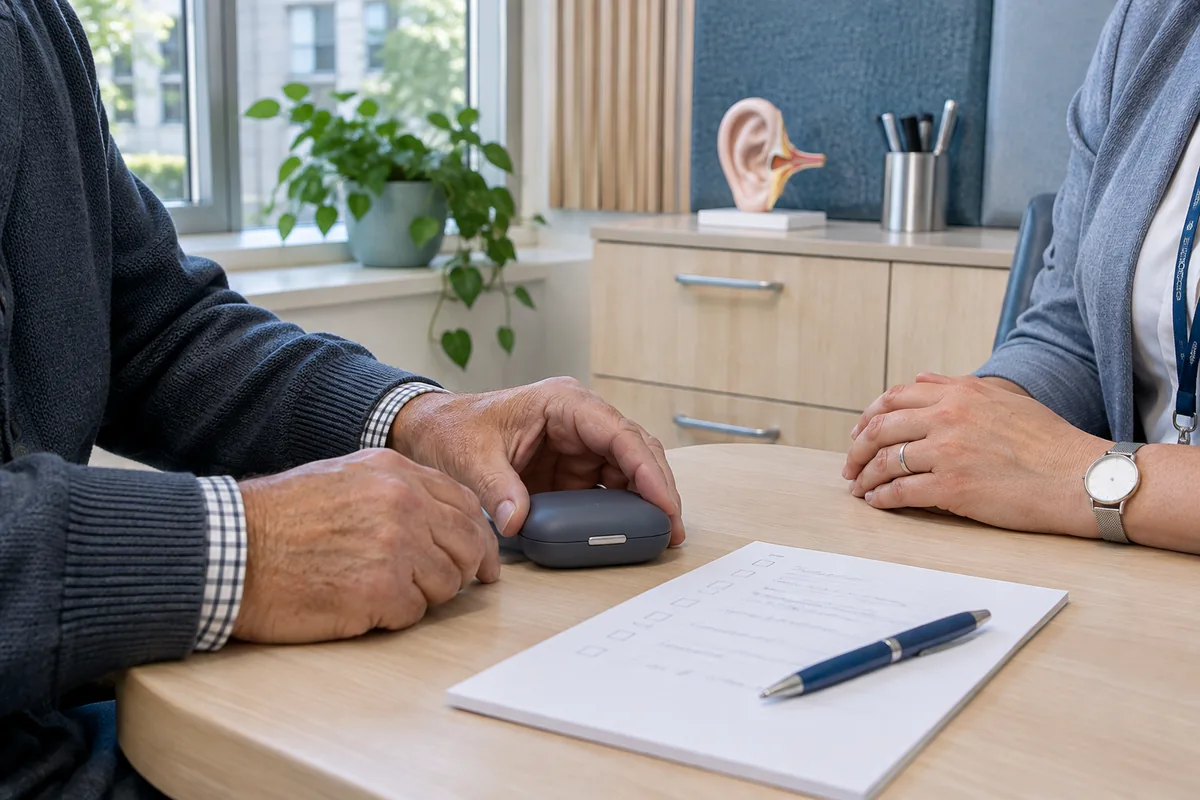
A hearing aid follow-up is a chance to discuss how the devices work in your actual life: what is clearer, what remains difficult, and whether the sound and physical fit are comfortable. Bring specific examples and ask for a plan you can explain afterward. Hearing aid adjustment often involves follow-up, and hearing aids do not eliminate every listening challenge.1
You do not need to arrive knowing which setting is wrong. Your job is to describe the experience; the clinician can help investigate it.
Before the appointment: collect three examples
Choose one situation that improved, one that is still difficult, and one practical problem with using the devices. Note where you were, who was speaking, whether there was background noise, and what you understood.
For instance, “I can follow my partner at breakfast, but I miss most of the conversation when the grandchildren visit” is more useful than “they don't work.” If you use a specific program or accessory, record which one was involved if you know.
Bring the hearing aids and the accessories relevant to the problem. Ask the clinic whether to bring chargers, a phone, or previous reports. If a communication partner attends, decide what you want them to contribute and keep your own priorities at the center of the visit.
Questions about comfort and fit
- Does the physical fit look appropriate, and what should I do if it causes pressure or soreness?
- Is the sound level appropriate for my hearing and the situations I describe?
- Which sensations or changes should prompt a call to the clinic?
- Can you show me again how to insert and remove the devices?
Be specific about discomfort. Describe whether it relates to wearing the device, a particular sound, or a change in the device's behavior. Do not accept pain as a required part of getting used to hearing aids. Ask for an assessment and clear instructions rather than experimenting with repairs or unadvised adjustments.
Questions about understanding speech
- What might explain the difference between hearing a voice and understanding the words?
- Would further testing help clarify my difficulty in noise?
- What can the hearing aids reasonably improve in this situation, and what may need another approach?
- How can we judge whether today's change helped?
An adjustment should connect to the problem you described. Ask the clinician to explain the intended effect in ordinary language. You can then try a comparable situation and bring back a useful observation.
If there are several concerns, agree on priorities. Changing many things without a way to compare them can make it difficult to describe what helped.
Questions about noise and other access tools
Hearing aids can improve access to speech while leaving some situations difficult.1 Ask about both the device and the environment.
A useful question is: “For my weekly meeting, would seating, captions, a microphone, or another change make the biggest difference?” Assistive listening systems and visual supports have different uses, and compatibility may need checking.2
Ask to see how an accessory would work with your equipment and in your situation. Discuss handling, charging, connection steps, cost, and what other people would need to do. A tool that works in a demonstration should also fit your routine.
Questions about daily use and maintenance
- Which checks should I perform when a hearing aid seems quiet or stops working?
- How should I clean and store this model?
- What should I do about moisture, charging, or battery problems?
- Which controls can I use, and when should I contact the clinic?
- Is there a written or accessible version of these instructions?
Ask for a demonstration, then try the task yourself if you want to. Let the clinician know if small parts, vision, hand movement, or the instructions make a task difficult. The aim is a method you can use reliably, with help if you choose it.
Leave with a clear next step
Before leaving, summarize the plan back in your own words. It might be: “I will try the recommended meeting setup, note two examples, and contact you if the sound remains uncomfortable.” This is an illustrative plan, not a standard schedule.
Ask when to review progress, who to contact between appointments, and whether listening practice or communication strategies would help with the remaining goal. If practice is suggested, ask what it targets and how its usefulness will be assessed.
Sudden hearing loss over hours or a few days needs immediate medical attention, even if you suspect a device problem or a blocked ear. Do not wait for a routine follow-up.3
For ongoing hearing aid concerns, a productive appointment should leave you with three things: a clearer explanation, an agreed change or next assessment, and a way to report what happens afterward.