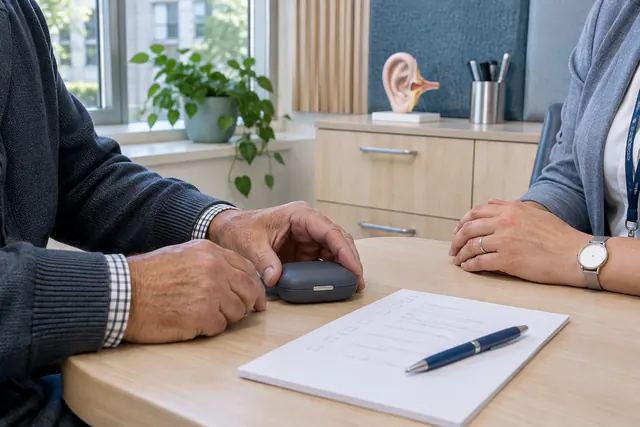

For a tinnitus appointment, bring a brief symptom history, a medication list and the questions you most want answered. Describe both the sound and its effect on your life. Hearing, sleep, distress and communication may need different kinds of support, so it helps to make each concern visible.1
You do not need to arrive with a diagnosis, a detailed sound recording or weeks of tracking. A short, clear account is enough to begin.
Check whether a routine appointment is appropriate
If tinnitus is accompanied by a sudden drop in hearing, seek urgent medical assessment rather than waiting for a scheduled visit. Sudden hearing loss needs prompt attention.2
Call emergency services for new symptoms that could indicate a stroke, such as facial drooping, arm weakness or difficulty speaking. When arranging an appointment, mention pulse-synchronous tinnitus, recent injury, ear pain or discharge, dizziness and changing hearing. The service can advise on the appropriate route and urgency.1
For longstanding symptoms without an acute change, a planned appointment can help clarify assessment and management. If you are unsure, tell the service what has changed and ask.
Write a short account of the sound
Include when you first noticed it, whether it is constant or intermittent and whether it occurs in one ear, both ears or seems to be elsewhere. Note whether it follows the rhythm of your heartbeat. Use your own words for the sound.1
If there was a relevant event, such as illness, a medication change or noise exposure, record the timing without assuming it proves the cause. Bring any previous hearing or ear assessment reports you already have.
A simple example is: “I first noticed a steady buzz about a month ago. It is mainly on the right. I am unsure whether my hearing has changed, but I am asking people to repeat themselves more often.”
Describe what it changes in your day
Choose two or three examples. You might struggle to fall asleep, stop reading because you keep checking the sound, or find conversation difficult. Separate hearing difficulty from tinnitus-related worry where possible.1
Tell the clinician about sound intolerance too. If a suggested background sound would be uncomfortable or painful, that information needs to be part of the plan.
You can also say what remains manageable. A balanced account helps the clinician understand where support is most useful, rather than assuming every activity is affected equally.
Bring the essentials
Bring or have access to your current medication list, relevant medical information and any hearing devices you use. Include nonprescription products and supplements, especially if you have tried them for tinnitus. Do not change prescribed treatment solely to prepare for the visit.3
Ask in advance about communication arrangements. You may want written instructions, a quieter space, an interpreter or a support person. If sound causes discomfort, tell the service before testing so you can discuss how the assessment will be conducted.
Questions about the assessment
You can choose the questions that fit your situation:
- What does the assessment suggest, and what remains uncertain?
- Do I have a hearing difficulty that needs separate attention?
- Are there symptoms that need medical investigation or another referral?
- Do I need further tests, and what would they change?
- Which changes should prompt me to contact you sooner?
There is no requirement to ask every question. Start with the ones you would most regret leaving unanswered.
Questions about treatment and support
Ask what each recommendation is intended to improve. For example, is the goal clearer hearing, less tinnitus distress, better sleep or support with a particular activity? Discuss the evidence, practical burden and possible downsides.1
Useful follow-up questions include: “What are the alternatives?” “How will we know whether this is helping?” and “What should I do if it makes symptoms worse?” If a device or program is suggested, ask about cost, access, follow-up and the provider's role.
You can take time to consider an option. Understanding the plan is more important than agreeing to every intervention during the first appointment.
A one-page preparation note
Copy these prompts onto paper or into a note you can bring:
My main concern: What I most want help with.
About the sound: When it began, which side, whether it is intermittent and whether it follows my pulse.
Other symptoms: Hearing changes, pain, dizziness, sound intolerance or other relevant changes.
Effect on daily life: Two or three specific examples.
Relevant history: Medication, noise exposure, ear or hearing assessments and what I have already tried.
My questions: The three questions I want to prioritize.
Agreed next step: What happens, who arranges it and when we review it.
This is a conversation aid, not a diagnostic form.
Before you leave
Ask for the plan in a format you can use. Confirm who will arrange any referral, how to contact the service and what follow-up is expected. If something was unclear, repeat back your understanding and ask the clinician to correct it.
A useful appointment should leave you with more than a list of options. You should understand what the next step is meant to address and how you will decide whether it is helping.