This activity pairs a familiar everyday sound with its source, then gives you a chance to identify it. Use comfortable sounds in a safe setting, with pictures, objects, or written choices if helpful. The purpose is to explore recognition with feedback, not to prove that you will hear an alarm or a hazard in daily life.
Environmental sound recognition is one of the activity areas described in Sonara's public materials. The sequence below is an original home example rather than a reproduction of a specific app session.1
Choose sounds that are familiar and comfortable
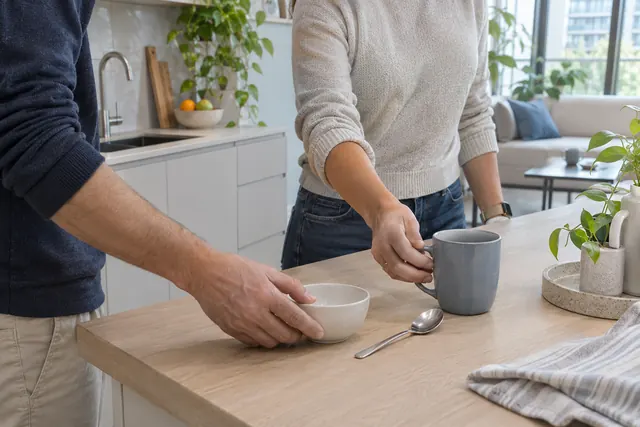
A partner might gently rustle a piece of paper, stir a spoon in a cup, or zip a fabric pouch. Choose objects that are safe to handle and sounds that you can control. Avoid loud appliances, startling sounds, whistles, alarms, or anything that has caused discomfort before.
If using recordings, preview their volume before starting. The beginning of a clip can be unexpectedly loud. Keep a clear stop control available and use a listening setup your audiologist considers appropriate for you.
Start with just a few clearly different sounds. If the sound itself is unfamiliar, learning its label becomes another task. You can still explore it, but do not count unfamiliarity as a failure to hear.
Connect each sound to its source
Let your partner show you an object while making its sound. Look, listen, and discuss it. You might notice whether the sound is continuous or brief, has a regular rhythm, or changes as the action changes.
There is no single correct description. “A little rattling sound” may be a more useful starting point than a technical acoustic term. If you use a cochlear implant or hearing aid, a familiar object may sound different from your memory of it.
The partner should check that the activity is comfortable, rather than repeatedly asking whether you can hear something. If a sound is difficult to access, choose another example or ask your clinician about the setup.
Try an identification round
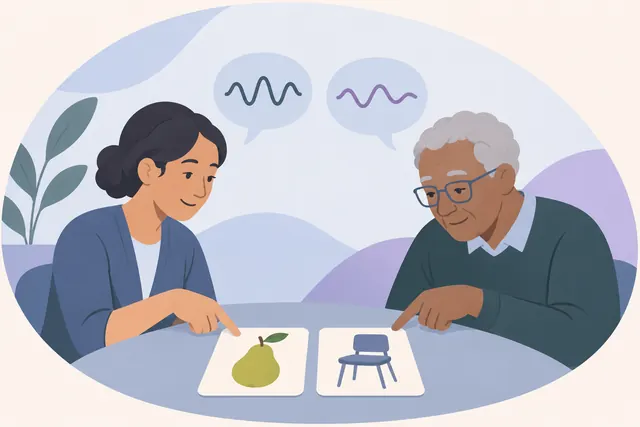
- Put the objects or pictures where you can see the choices.
- Ask your partner to make one sound without showing which object they used, if you are comfortable with that arrangement.
- Point to, name, or otherwise indicate the source you think it was.
- Check the answer together, then look at the object while hearing it again if helpful.
- Move on to another sound or stop for a break.
If hiding the source makes the activity confusing or stressful, keep the source visible. You can practice connecting an action and a sound without turning every attempt into a test.
For someone with aphasia, use meaningful pictures and an agreed pointing response. A difficulty naming an object does not necessarily mean the person failed to recognize its sound. A speech-language pathologist can help distinguish those demands.
Adapt the task without making it uncomfortable
To make identification easier, reduce the number of choices or use sounds that are more distinct. To explore a new challenge, try another safe example of the same sound source, such as a different fabric zipper, while keeping the other conditions similar.
Changing rooms, distance, and devices also changes what you hear. Do not assume that identifying one recording means you will recognize every version in every setting. If the goal involves a particular household sound, discuss an appropriate way to assess it with your clinician.
Short, comfortable attempts are enough to begin exploring. There is no required number of repetitions, score, or daily duration for this example.
Understand the evidence and its limits
A small study of 14 experienced adult cochlear implant users found improved environmental-sound identification after computer-based training. It did not find significant improvement on the speech tests used in that study.2 That supports studying sound recognition as its own outcome; it does not prove broad improvements in communication or establish that this home example is effective treatment.
If you keep notes, record which sources were easy or confusing, whether pictures helped, and whether the sound was comfortable. These observations can help your audiologist choose relevant activities or consider other support. They are not a diagnostic result.
Keep safety separate from practice
Never rely on this activity to decide whether a person will hear a smoke alarm, vehicle, doorbell, or warning call. Recognition in a quiet room does not reproduce everyday safety conditions. Do not practice with traffic, live hazards, or by deliberately setting off an alarm.
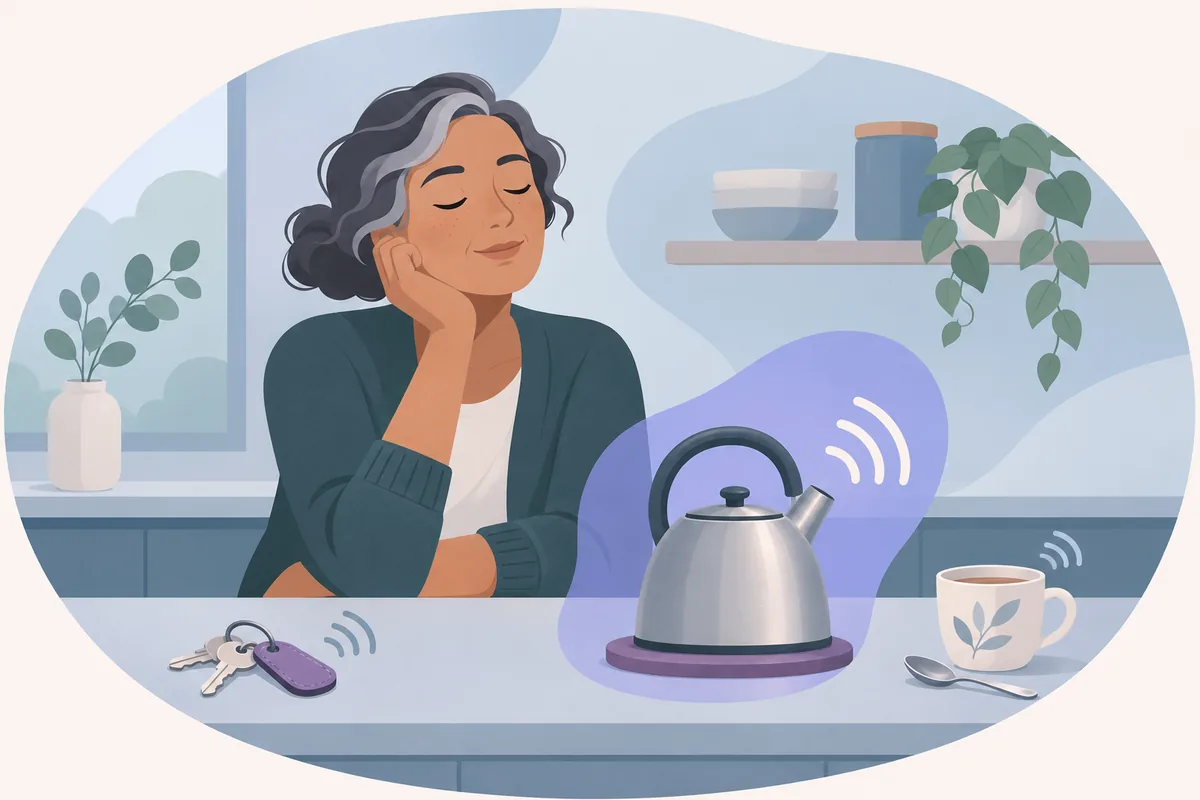
Ask about suitable visual or vibrating alerts when hearing an important signal is uncertain. NIDCD describes alerting systems that use light, vibration, sound, or a combination; the appropriate option depends on the situation.3
Pause if a sound causes pain, distress, or a marked symptom increase, and discuss that response with a qualified clinician. The useful outcome of the session is a clearer picture of what you recognize comfortably and what support you might need.