You can prepare your child for an audiology appointment by explaining it simply, sharing what helps them feel comfortable, and bringing examples of your hearing concerns. A pediatric hearing assessment is adapted to the child's age, development, and ability to take part. It may use several kinds of tests rather than one pass-or-fail task.1
Your child does not have to practice giving the “right” answers. The audiologist needs to discover what the child can hear and how reliably the different results fit together.
Explain the visit in familiar language
For a younger child, try: “We are going to meet someone who checks how your ears hear. You may listen to sounds and play some games. We can ask questions and take breaks.” Avoid promising that every part will be fun or that nothing will feel unfamiliar.
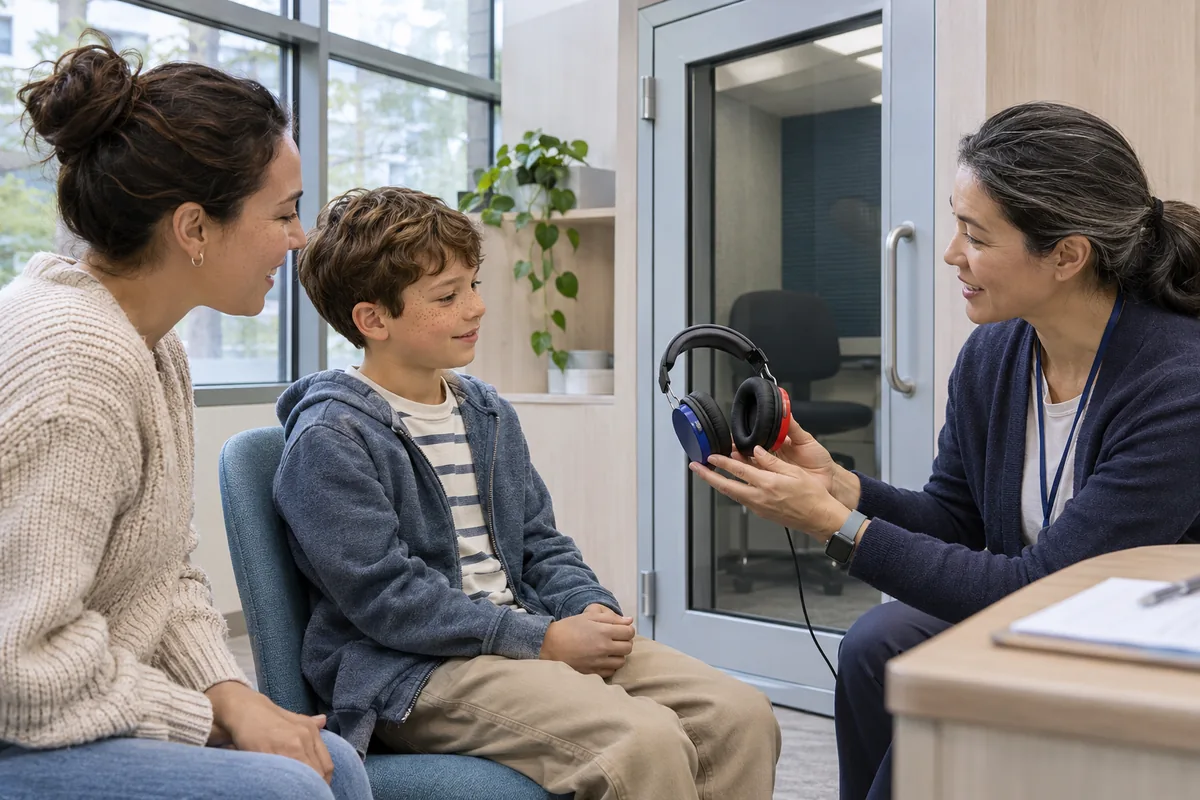
An older child may want more detail: who will be in the room, whether they will wear headphones, how long the appointment might take, and when they will hear the results. Ask the clinic for a description or photographs if these would help. Let your child say what they are curious or worried about.
If your child uses sign language, communication aids, or another language, arrange appropriate communication access with the clinic in advance. Do not assume that the appointment automatically includes an interpreter or every requested support.
Tell the team what helps your child participate
Before the visit, share relevant information about sensory preferences, mobility, communication, attention, or anxiety. Mention if your child finds objects in or near the ears uncomfortable, needs extra time to respond, or benefits from seeing equipment before trying it. These details can help the team plan how to obtain meaningful results.1,3
You could ask whether your child can hold a familiar object, sit with a caregiver, see the room first, or pause between activities. These are requests to discuss, not requirements that every clinic can meet in exactly the same way.
For example, a child who dislikes headphones may feel more prepared after hearing that the audiologist will show them the equipment and explain the next step. Do not force a rehearsal at home if it creates more distress. Tell the clinician about the difficulty instead.
Gather observations that explain the concern
Write down a few specific situations. Does your child respond differently in quiet and noise? Do they seem to hear one speaker more easily than a group? Has a teacher noticed difficulty following spoken instructions? When did the concern begin, and has it changed?
Include relevant medical and hearing history, such as earlier screening results, ear infections, ear surgery, known hearing conditions in the family, or previous specialist assessments. Bring a medication list and records the clinic requests. If your child already uses hearing devices, ask whether to bring them, chargers, accessories, and recent reports.
Also record strengths. Perhaps your child follows conversation well face-to-face or uses visual information effectively. A useful assessment considers communication in everyday life, not only the moments that worry adults.3
What might happen during testing?
The audiologist selects tests based on the questions being asked and the child's developmental needs. Not every child needs every test.1
Looking at the ears and checking middle-ear function. The clinician may inspect the ear canal and use a small probe to assess how the eardrum and middle ear respond. Ask for an explanation your child can understand before each step.
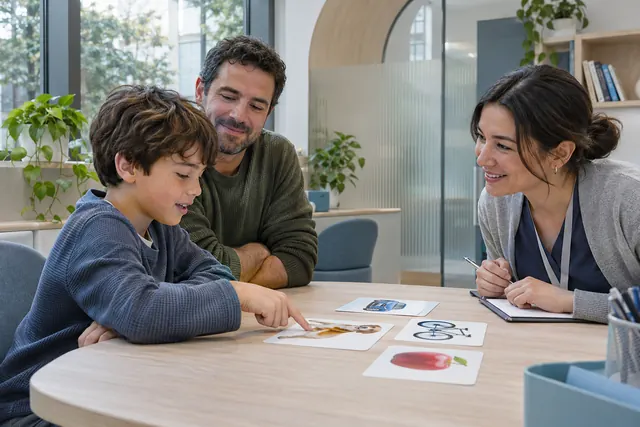
Behavioral listening tests. Depending on development, a child may turn toward a sound, complete a game when they hear something, or respond using a button or gesture. The audiologist chooses a method that gives the child a manageable way to show what they heard.
Otoacoustic emissions, or OAEs. A small ear probe measures responses produced by the inner ear. The child does not have to answer questions for this test.2
Auditory brainstem response, or ABR. Sensors placed on the skin measure responses to sound along the auditory pathway. For some children, the test can be done during natural sleep. The clinic will explain any special preparation or whether another approach is needed.2
These results provide different pieces of information. The team interprets them together; no single result should be treated as a complete explanation of every listening difficulty.1
Follow the clinic's preparation instructions
Ask about the expected appointment length, arrival arrangements, and whether the test has special requirements. Follow the team's instructions exactly if sleep, eating, or other preparation is involved. Do not change medications, restrict food, or deliberately keep your child awake based on a general article.
For an ordinary appointment, plan for practical needs such as travel time, snacks if permitted, familiar comfort items, and access to a restroom. If your child becomes ill or develops ear pain before the visit, contact the clinic to ask what to do.
During a behavioral test, let the clinician guide the activity. Well-intended hints from a caregiver can make it harder to know whether the child heard the sound independently. You can support your child emotionally while allowing the audiologist to interpret the responses.
What if the appointment does not answer everything?
A child who cannot complete a particular task has not failed the visit. The team may need a different method, another appointment, or additional information. Ask what was learned, what remains uncertain, and how the next step will address that uncertainty.1
If a newborn or infant did not pass a hearing screening, timely follow-up matters. Screening is not a diagnosis, and waiting to see whether a child grows out of the concern can delay clarification and support.2
Questions to ask before leaving
- What do the results tell us about each ear, and what remains unclear?
- Could middle-ear problems or another factor affect today's results?
- What support can we use at home or school now?
- Are further tests, referrals, or follow-up appointments recommended?
- How will you explain the results to my child, and can we have a written summary?
If your child suddenly loses hearing over hours or days, seek immediate medical attention rather than waiting for a routine appointment.4 For ongoing concerns, a prepared visit gives the family a clearer starting point: what is known, what needs checking, and how to support the child's communication next.