
Helping a child adjust to hearing aids starts with comfortable, well-functioning equipment and communication they can access. It also means finding out how the child experiences the devices. A family routine should support their participation and give the audiologist useful feedback, rather than turn wearing hearing aids into a daily contest.1
The plan will look different for a toddler, a school-age child, and a teenager. Your child’s hearing needs, development, preferences, and daily activities should guide the details.
Ask the audiologist to make the plan concrete
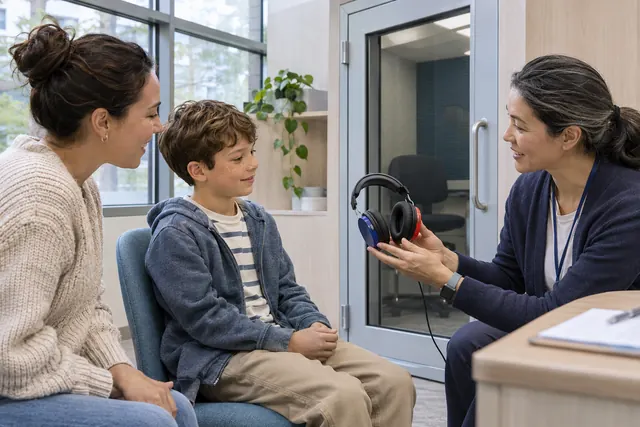
Before leaving a fitting or follow-up visit, ask which situations the hearing aids are intended to support and what wearing routine is recommended for your child. Have the clinician explain how to put the devices in, check their function, manage charging or batteries, and identify a problem.1
Practice these steps while someone can help. A demonstration is often more useful than being handed a set of instructions at the door. Ask for a written or visual version you can share with the adults who will handle the devices, with appropriate permission.
Find out whom to contact for discomfort, unexpected feedback, changes in sound, or damage. Keep spare supplies and small components stored safely, away from young children and pets. Only use retention or safety accessories that the care team recommends for your child.
Treat resistance as information
If your child removes the hearing aids or avoids wearing them, ask what might be happening. They may be uncomfortable, uncertain about unfamiliar sound, bothered by how the devices feel, or concerned about other people’s reactions. You may not know the reason immediately.
A younger child can show you where something hurts or point to a picture. An older child may prefer a private conversation rather than being questioned in front of family or classmates. Offer a way to respond without a long explanation: “Does it hurt, sound strange, feel annoying, or is something else going on?”
Do not assume that repeated removal is defiance. Also avoid trying to solve every concern by changing volume or fit yourself. Describe what you observe and ask the audiologist what should be checked.
Build one predictable routine at a time
Choose a calm part of the day for equipment care. An illustrative routine might pair the morning device check with getting dressed, then place the storage case in the same safe location each evening. The exact wearing plan should come from your child’s clinician.
Make the routine easy for other caregivers to follow. A small card can identify who performs the check, where equipment is stored, and whom to contact if something goes wrong. Avoid putting sensitive medical details on a card that will be widely visible.
For a child who wants more control, offer choices that do not compromise the care plan: which storage case to use, who helps with the check, or which familiar activity comes afterward. Small decisions can make equipment management feel more like an ordinary part of life.
If the routine repeatedly fails, change the routine. A rushed school departure may be a poor moment to teach a new skill. The solution may be extra time, a simpler sequence, or more help from the care team.
Keep communication available throughout the day
Hearing aids support access to sound, but they do not make every conversation easy or replace a child’s need for clear language access.2,3 Keep the child’s preferred communication methods available, including sign language, visual information, captions, or spoken communication with appropriate support.
Get the child’s attention before giving important information. Keep your face visible if that helps them, and avoid calling instructions from another room. When a message is missed, rephrase it or show what you mean.
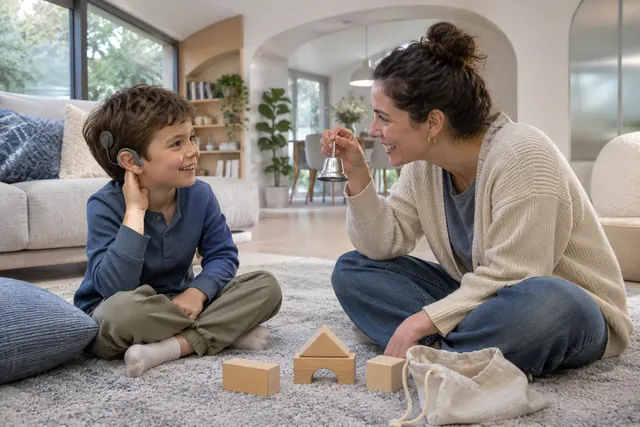
An illustrative bedtime example is to sit together with a picture book, follow the child’s interest, and communicate about the page in the way that works for them. It does not have to become a listening drill. Shared enjoyment and understanding are useful aims in their own right.
Prepare for school, childcare, and activities
Ask how the school or childcare setting will support the devices and the child’s communication. Identify a named adult who knows the agreed basic checks and a backup person when that adult is absent.
Work through actual situations: group time, lunch, outdoor play, physical education, video lessons, and transitions between rooms. The device routine and the communication plan may differ across these settings. Ask the audiologist about moisture, sports, and other equipment-specific considerations rather than relying on general internet advice.
Discuss how the child wants others to know about the hearing aids. A brief class explanation may suit one child and feel intrusive to another. Revisit this as the child grows and gains confidence expressing preferences.
Assistive listening or alerting technology may help in selected situations, but compatibility and benefit need to be checked.4 A school should have a plan for using and maintaining any recommended equipment, not simply a device in a cupboard.
Track the situations that need attention
Keep notes short and specific. “The earmold seemed sore after lunch,” “The device whistled when the child’s hat was on,” or “Instructions were easier with the teacher facing the class” gives the clinician a practical starting point.
Also record successes. Was the child able to join a game they wanted to play? Did they ask an adult to repeat one word? Did they manage part of the equipment routine independently? These observations broaden the conversation beyond wearing time alone.
Seek advice promptly for pain, skin problems, persistent feedback, or a noticeable change in hearing or device performance. Do not use repeated practice to compensate for a suspected fitting or equipment problem.
Let independence grow with the child
Teach one manageable responsibility at a time. A child might first learn where the case belongs, then later learn a clinician-approved check or how to describe a problem. Continue adult supervision for tasks that need it, particularly battery handling and maintenance.
For your next appointment, ask your child to choose something they want the audiologist to know. Bring your own observations separately so their voice remains visible. A useful adjustment plan respects both the child’s experience and the clinical work needed to make the hearing aids effective and comfortable.