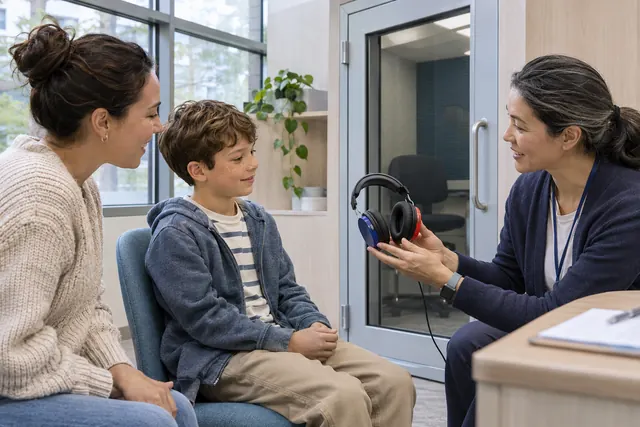

Living with hearing loss as a teenager can mean making choices about friends, school, devices and when to ask for support. You should have a say in those choices. A useful plan makes communication more accessible while helping you take the role you want in your own care.1
There is no single right way to be a teen with hearing loss. You may use speech, sign language, hearing aids, cochlear implants, captions or a combination. Your preferences can change between situations, and you do not have to defend every choice.
Start with something you want to do more easily
Choose a real situation: joining a lunch conversation, following a teacher who moves around the room, gaming with friends or hearing instructions at a part-time job. “I want to be part of the conversation” is a better starting point than “I should ask for fewer repeats.”
Describe what gets in the way. Is the room noisy? Are several people talking? Is the video missing captions? Does your equipment disconnect? Each problem suggests a different next step.
An illustrative example is a group project where everyone talks while someone types. You might ask the group to decide one question at a time and keep the decisions in a shared document. That changes the task for everyone instead of making you responsible for catching every word.
Tell friends what helps, in your own words
You can keep an explanation short. “If you get my attention first, I am less likely to miss the beginning” gives a friend something useful to do. So does “Please face me when you tell me the plan.”
If someone says “never mind” when you ask for a repeat, you can say, “I still want to know what you said.” You are asking to be included, not asking for a favor that needs an apology.
You can also choose how much to disclose. Some people like explaining their hearing devices; others prefer to say only what adjustment they need. If a situation feels awkward, rehearse a phrase with a trusted person and adapt it so it sounds like you.
Friends can help without taking over. Ask them to fill you in on a topic change or type an address if that is useful. They should not answer for you or decide that a conversation is too difficult for you to join.
Make school support specific
A school plan should reflect your actual listening and language access needs. Talk with the relevant teacher, school support professional, audiologist and family members about the situations that matter to you.1 If a plan already exists, ask to review whether it works in this year's classes.
Potential questions include whether videos are captioned, how discussion turns are managed and how you receive announcements or important instructions. If sign-language services are part of your access plan, include them when discussing classroom changes, trips and extracurricular activities.
Do not judge a support only by whether it exists on paper. A remote microphone that is left uncharged or an uncaptioned video assigned for homework may leave the original problem unresolved. Ask who is responsible for setup, what the backup is and whom you can contact when something fails.
Seating should be chosen around access, not automatically assigned to the same place in every room. The teacher's position, lighting, noise and the way discussions work may all affect the useful arrangement.
Take device independence one task at a time
If you use hearing devices, ask your audiologist to teach the tasks you want to manage yourself. That might be checking power, using the controls you have been advised to use, recognizing a fault or explaining a problem to the clinic.2
You do not have to take over everything at once. An illustrative plan is to handle charging independently while a caregiver still helps with ordering supplies. Later, you might write the message to the hearing service and ask someone to check it before you send it.
Agree on a backup for a dead battery, lost part or disconnected accessory. Keep the plan realistic for your school bag and daily routine. Do not change programming or attempt repairs that your team has not taught you to do.
Ask about privacy too. If a device app or school technology shares information, find out what is collected, who can see it and what choices are available. Having support should not mean having every interaction monitored.
Use the communication tools that work for you
Captions, text, visual alerts and assistive listening systems can all contribute to access.3 A tool's usefulness depends on the situation. Captions may work well for a video but be inaccurate in a fast group call; written action points may still be needed.
For online conversations, you can ask friends to avoid talking over one another, use the chat for names or links, or switch to a format you prefer. For an in-person event, check the access arrangements before you go when possible.
Using more than one route to understand a message is reasonable. You do not have to turn captions off to prove that your hearing aid or implant is helping.
Protect hearing without giving up activities you enjoy
Loud sound can damage hearing, including hearing that you already rely on. Risk depends on sound level, duration and distance from the source.4 Ask your hearing professional about appropriate protection for concerts, band, sports or work, particularly if you use hearing devices.
Move away from very loud sources, take breaks and keep personal audio at a comfortable level. Do not assume that a hearing aid or ordinary noise-canceling headphone is hearing protection. The equipment and fit need to suit the activity.
If sound causes pain or a change in hearing, tell a trusted adult and seek clinical advice. Sudden hearing loss needs immediate medical assessment rather than waiting until the next routine appointment.5
Make appointments work for you
Bring one question you want answered, even if a parent usually manages the visit. You can ask the clinician to speak directly to you, demonstrate a setting again or write down the next steps. If you want time to discuss a concern privately, ask the service what is possible.
At the end, describe the plan in your own words and identify which part you will manage. A good goal is increasing choice and confidence, not proving that you never need help. The support plan should make room for your schoolwork, friendships, interests and the way you want to communicate.