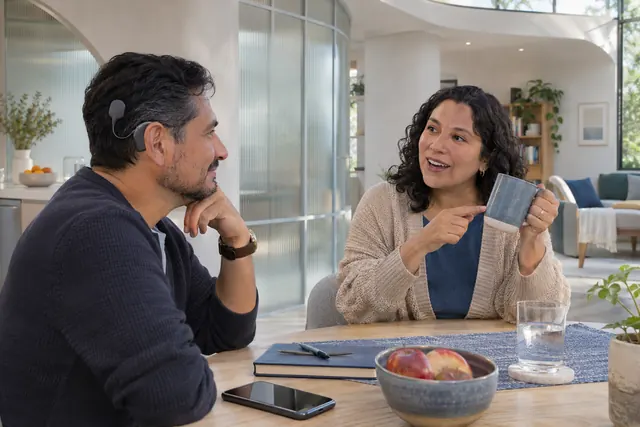

Cochlear implant rehabilitation for an older adult should be built around that person's communication goals, hearing history and access needs. Age alone does not tell you what the experience will be like or which supports you will need. The implant team can help set expectations and adjust the plan as you learn to use the sound from the device.1,2
Useful goals may include following a conversation with a partner, taking part in a club, communicating at medical appointments or enjoying a familiar program. Your priorities should guide the work.
Start with your own definition of useful hearing
Before planning exercises, describe one or two situations you want to improve. “Follow the main point at my book group” gives the team a clearer target than “hear better.” Include which communication supports you already prefer, such as captions, writing or sign language.
The starting point varies. Someone who has used hearing aids for years may bring different experience from someone with a recent major hearing change. Previous listening experience, the implant setup and individual circumstances matter when discussing rehabilitation.1
Ask what progress can reasonably be assessed now and what remains uncertain. A clinician can explain typical parts of the process without promising a fixed result or comparing you with another recipient whose history is different.
Keep programming and rehabilitation connected
Programming appointments, often called mapping, adjust how the implant provides sound. Rehabilitation focuses on using that information for communication. They are related, but a home exercise cannot replace an equipment or programming review.2
Bring concrete observations to visits. For example: “The television is more recognizable, but a voice across the room still sounds indistinct.” If a setting is uncomfortable, describe when and how it happens instead of assuming it is a necessary part of adjustment.
Keep the contact details for the implant service somewhere easy to find. Ask which concerns need a call before the next scheduled visit and what to do outside office hours. An unexpected change in device performance should have a clear route for help.
Make appointments accessible from the beginning
Consider how you will communicate before, during and after a visit. Ask for written appointment details and a written summary of the plan. If phone calls are difficult, ask which alternative contact methods the service offers.
Transport, appointment timing and distance can affect follow-up. Discuss those practical constraints early. If remote visits are available for part of your care, ask what they can cover and what still requires attendance. Availability and clinical suitability vary.
You may want a family member or friend to attend, but that is your choice. Tell the team what role you want them to have. They might take notes or help remember questions while the clinician continues to address you directly.
Adapt equipment routines to the person
Handling, charging and storing the processor should be manageable in your daily environment. If small parts, screens or written instructions are difficult to use, ask for a demonstration and an accessible alternative. These are design and access questions, not assumptions about what someone can do because of age.
An illustrative routine is to keep charging supplies in a consistent, well-lit place and use a short written checklist for the tasks your team recommends. Another person may prefer a phone reminder or to link charging with an established evening activity.
Ask for help only with the tasks you want help with. A support person can manage a supply order without taking control of the entire device routine. Before changing programs or attempting a repair, follow the instructions from your implant team and manufacturer.
Choose home practice that connects with ordinary life
A short, familiar listening task may be more useful than a long series of unrelated drills. You might follow a brief recorded passage with a transcript, listen for the key point in a partner's message or practice confirming the time and location of an event.
These are illustrative activities to adapt with your clinician. Start with conditions that let you understand the task and check the answer. If fatigue, discomfort or frustration becomes the main experience, pause and discuss a different level or format.
Research on adult implant auditory training suggests potential benefits, but the evidence comes from varied, often small studies.4 It does not establish one schedule or app as the right answer for all older recipients. Ask why a proposed activity fits your goal and how the team will review its usefulness.
Keep communication supports available
An implant does not remove the value of captions, written information, visual alerts or assistive listening technology. These tools can support access while you are learning and whenever a situation remains difficult.3
At a group event, you might combine good seating with a request for one speaker at a time. At a medical appointment, ask for important instructions in writing and check them back with the clinician. In a phone conversation, use a compatible accessible option that you have been shown how to use.
Success does not require relying on the implant alone. It means being able to participate in the activities that matter to you with an acceptable level of effort and support.
Review more than an exercise score
Record one practical observation when something changes. “I could follow the topic at lunch when we moved tables” tells you what helped. “The practice words are easier, but calls are unchanged” identifies a limit that needs discussion.
At follow-up, review participation, comfort and the demands of the routine alongside any clinical measures. Ask whether to continue the same activity, change its difficulty, adjust the device plan or focus on another support. Difficulty is information for adapting care, not a verdict on your ability to learn.
Know when to contact the implant team
Contact the implant team for pain, redness or skin irritation.5 Report unexpected stimulation or a marked change in sound to the team, too. Follow the team's instructions rather than pushing through an uncomfortable session or making unadvised changes.
A useful rehabilitation plan is one you can describe and carry out: a meaningful goal, manageable activities, reliable communication supports and a clear way to get help. It should develop with your experience and continue to respect your decisions.