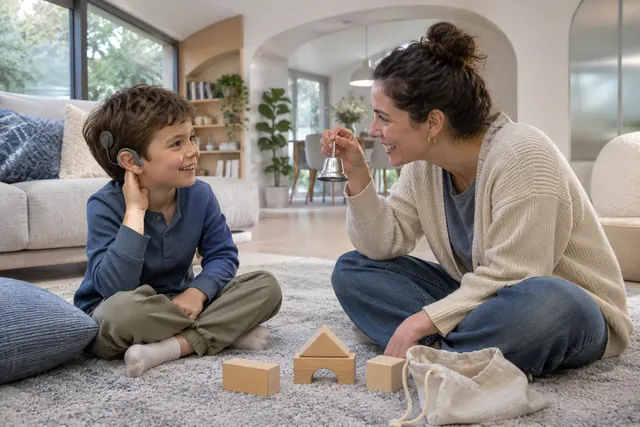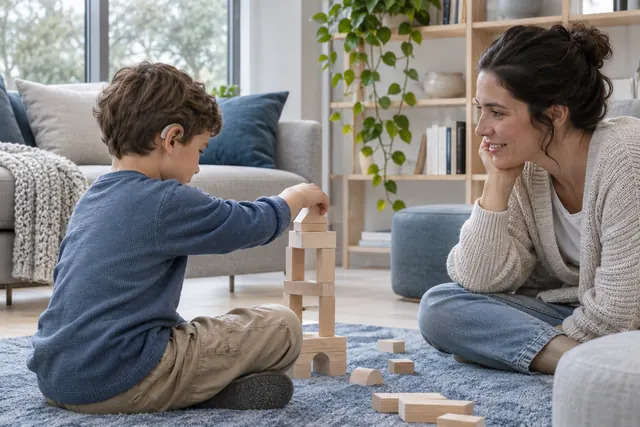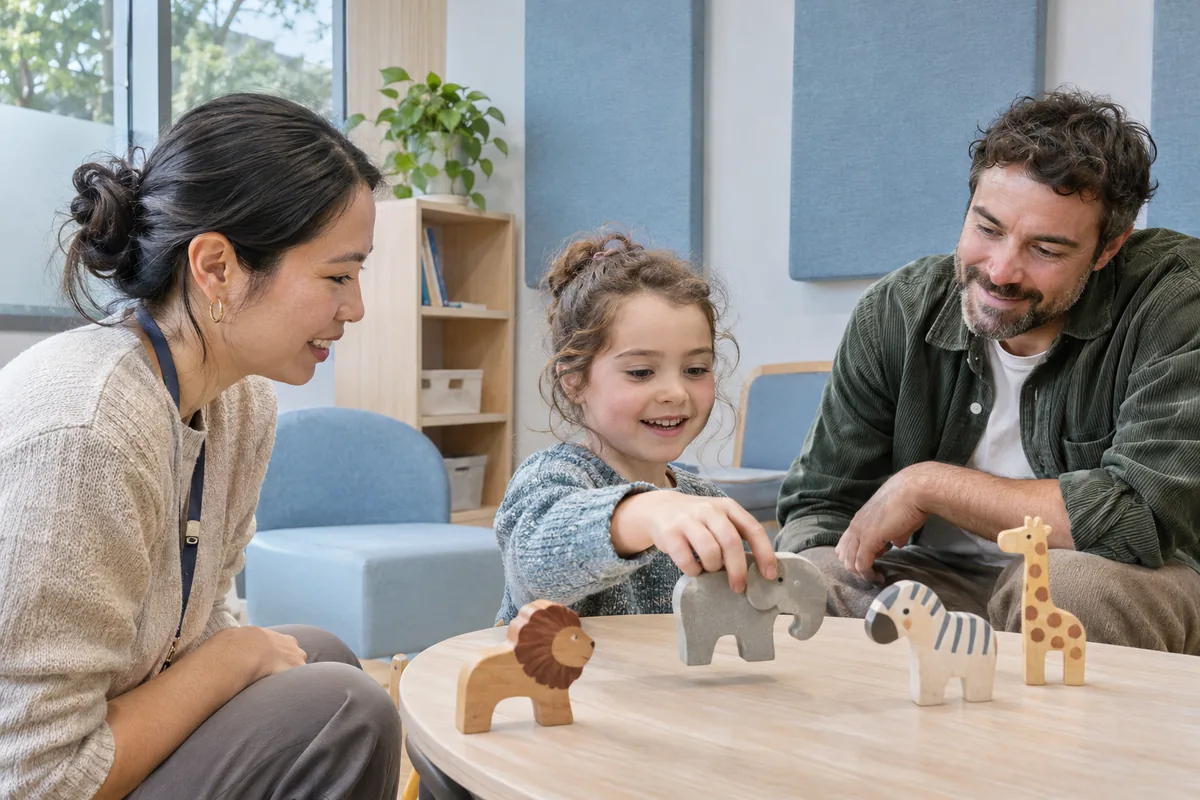
Pediatric listening practice should serve the child's communication and participation, within a plan that also supports accessible language. Start with the child's and family's priorities, review hearing and developmental needs, and select an activity that fits the child's communication approach and daily life. No single intervention suits every child with hearing loss.1
A home plan should make the family's next step clearer, not turn ordinary interactions into constant testing. The framework below is an original planning aid for clinicians. It does not establish a treatment dose or eligibility for a particular product.
Put language access and participation first
Listening is one part of communication. Children and families may use spoken language, sign language, a combination of approaches or other communication supports. A listening activity should sit within an individualized, coordinated plan that respects their goals and ensures meaningful communication access.1,2
Ask what the child wants to do and how they communicate most comfortably. Depending on age and development, their view may emerge through conversation, a choice between activities, play or observation. A parent's priorities and a child's experience may be different; make room for both.
Do not remove a needed communication support simply to make a task more auditory. If a particular assessment or training activity requires controlled conditions, explain the purpose, choose it carefully and keep it distinct from the child's access to everyday language and learning.
Review the clinical and developmental context
Confirm what the child's assessment shows and which questions remain unresolved. A child having difficulty following speech may need investigation of hearing, language, attention, the environment or other factors. An unsuccessful activity cannot establish a diagnosis.
For children using hearing aids or cochlear implants, coordinate with the team responsible for the devices. Cochlear implant use involves learning to interpret the sound the device provides, with individual variation in progress and support needs.3
Review comfort, function and the agreed listening setup before changing task demands. Also consider vision, motor access, literacy, fatigue, developmental level and the language used in the activity. An unfamiliar vocabulary item or inaccessible response method may obscure what the task is intended to explore.
Record these conditions so that other professionals do not interpret a result without its context.
Select one practical family goal
A useful goal names a situation. Examples include following a familiar instruction while getting ready, taking turns in a shared game, understanding a classmate during a quiet activity or asking for clarification when a message is missed.
Ask the family when that situation happens and what currently helps. Is it easier when the speaker is nearby? Does a visual cue clarify the task? Are several people talking at once? Would changing the environment solve part of the difficulty?
Then agree on the outcome that matters. A goal might involve participation, successful use of a repair strategy or less frustration. It need not be expressed only as a percentage of correct responses.
Clinical measures may still be appropriate, but they should be chosen and interpreted for their intended purpose. Keep informal family observations clearly labeled as observations.
Build an activity around the goal
Select materials the child can understand and use. A familiar play routine, short story or agreed household activity may offer a meaningful context, depending on the clinical purpose. Avoid claiming that an activity has evidence simply because it looks engaging.
Explain what the adult should do and what help is allowed. For example, the plan may specify when to repeat a message, offer a visual cue or simplify a choice. Those decisions should reflect the child and the aim of the activity.
Choose starting demands after observing the child. Duration, frequency, complexity and progression require individualized decisions; this guide offers no universal schedule. A child should be able to pause or stop. Distress or discomfort is information to investigate, not a reason to impose more repetitions.
Worked example: a shared pretend-shop game
This case is illustrative. A five-year-old child, Maya, uses hearing aids and enjoys playing shop. Her family wants her to feel more confident following a short request during play. They use both English and Spanish at home.
The clinician asks which language and words are familiar to Maya and observes the interaction before selecting a task. Device access and comfort are reviewed. The plan uses a small set of familiar objects and a communication approach agreed with the family.
The adult first makes sure Maya is ready to engage. The activity involves a short request related to the game. The clinician has specified the starting complexity and what support to offer if the request is missed. The family does not independently add competing noise or change device settings to make it harder.
The clinician and family agree on a manageable amount of play and signs that Maya has had enough. The adult notes a useful observation, such as whether she understood after a repeat or asked for clarification, without scoring every interaction throughout the day.
At review, the team considers whether Maya enjoyed participating, whether the task was accessible and what happened in similar everyday routines. If the vocabulary was the main difficulty, the next step may involve language support rather than increasing auditory demands.
Give caregivers usable instructions
A family handout can include the purpose, materials, setup, adult role, agreed starting demands, permitted supports and contact route. Demonstrate the activity and invite the caregiver to try it while the clinician observes.
Use the family's preferred language and an accessible format. Ask what would make the plan hard to carry out. Shift work, shared housing, internet access and other caregiving responsibilities may affect feasibility. Adapt the plan with the family rather than treating these circumstances as a failure to cooperate.
If a child has several professionals involved, identify who coordinates the home activity. Families should not have to reconcile contradictory instructions alone.
Connect home practice with school and early intervention
Early intervention and school services may be part of a child's support, alongside hearing technology, communication services and family support.1 With appropriate consent, discuss the child's goal and useful access strategies across settings.
Do not assume that success at home will appear in a classroom with different acoustics, speakers and demands. Ask educators what they observe and what access arrangements are in place. Assistive listening technology may be relevant in some settings, but selection and use should be individualized.4
Keep the shared information purposeful. A teacher may need to know which communication strategy helps, without receiving unrelated family or health information.
Review benefit, burden and the child's voice
At follow-up, ask three questions: Was the activity possible? Was it a reasonable experience for the child and family? Did it help inform the next step toward the communication goal?
Review task information alongside participation, language access and the family's observations. Improved performance on a familiar game does not automatically establish broader communication gains. Conversely, a child who confidently asks for help may have made a meaningful change that an accuracy score misses.
Revise the activity when the goal, developmental needs or family circumstances change. Pediatric practice works best as part of responsive care: the child has accessible communication, the family understands the plan, and the team remains accountable for interpreting what happens next.